Rome by Night Golf Cart Private Tour
Description
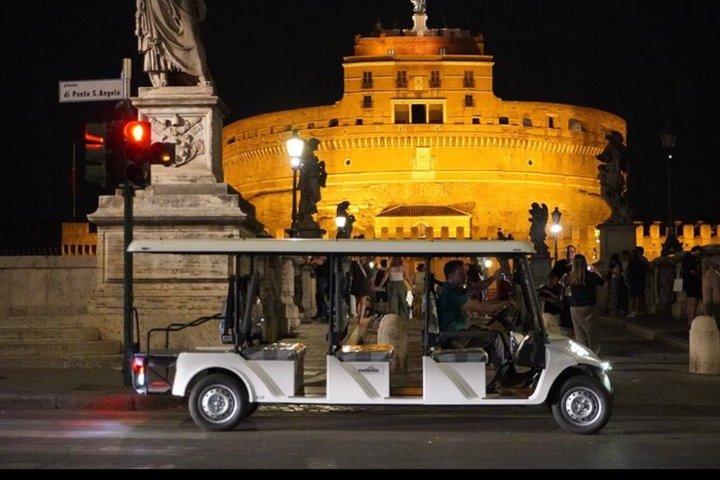
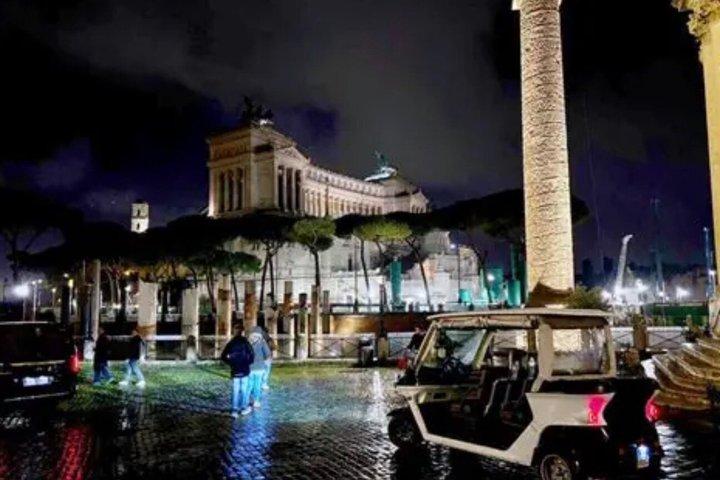
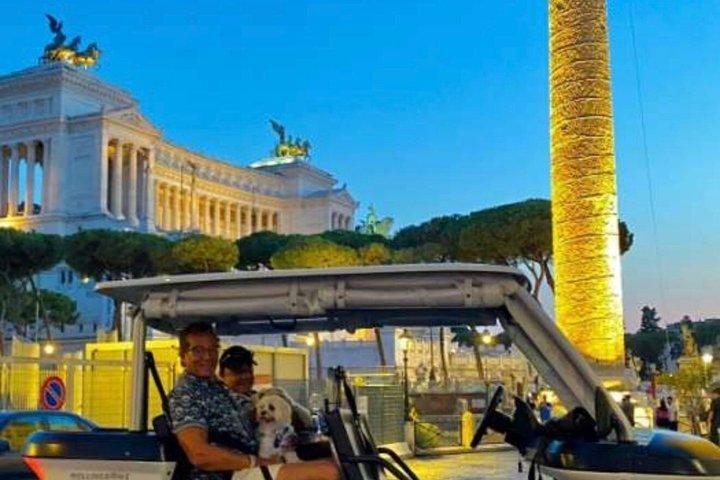
Discover Rome after dark on a VIP golf cart tour, where the city's captivating nightlife comes alive. Glide smoothly through the streets with a knowledgeable local guide, taking in stunning moonlit views from Gianicolo Hill. This unique experience combines the charm of the Eternal City with the convenience of a golf cart, making it perfect for those looking to explore without the hassle of late-night transport. Finish the evening with a delightful dessert that complements your adventure.
Tour Options
Itinerary
Piazza Navona evolved from the ancient Stadium of Domitian into one of Rome’s most celebrated Baroque squares, showcasing centuries of Roman history, art, and architecture.
The Spanish Steps in Rome were built between 1723 and 1725, funded by a French diplomat, and designed to connect the Piazza di Spagna with the Trinità dei Monti church.
Piazza del Popolo, meaning "People's Square," is a historic square in Rome that has a rich history dating back to ancient times. It was once the main northern gateway to the city, designed to impress visitors arriving from the Via Flaminia. The square has been a place for various events, including public executions, and has been a symbol of Rome's grandeur and cultural significance. The current neoclassical design was created by architect Giuseppe Valadier between 1811 and 1822, enhancing its symmetry and beauty. The square is also home to the Flaminio Obelisk, an ancient Egyptian monument, and the basilica of Santa Maria del Popolo, which houses a collection of Renaissance and Baroque masterpieces.
The Janiculum, also known as Gianicolo, is a hill in western Rome that has a rich history dating back to ancient times. It was originally inhabited by the Etruscans and later by Romans, Syrians, and other groups. The hill was fortified by King Ancus Marcius and connected to the city of Rome via the Pons Sublicius. It became a significant defensive point for the city and was sacred to the god Janus. The Janiculum played a crucial role in the defense of Rome and was a strategic location for public assemblies. It also became a symbol of the Italian unification movement in the 19th century, particularly during the battle between Garibaldi's forces and French troops in 1849. Today, the Janiculum is a public park and a memorial to the Risorgimento, featuring monuments and commemorations of key historical figures and events.
Trastevere, meaning "beyond the Tiber," is one of Rome’s oldest neighborhoods, with roots tracing back to the Etruscans and a rich history spanning Roman, medieval, and modern times.
The Pantheon in Rome, originally built by Marcus Agrippa around 27 BCE and rebuilt by Emperor Hadrian around 125 CE, is one of the best-preserved and most architecturally influential buildings of ancient Rome.
The Roman Forum was the political, religious, and social heart of ancient Rome, evolving from a marketplace into a monumental center of power and ceremony.
The Trevi Fountain, completed in 1762, is Rome’s largest Baroque fountain, built at the terminus of the ancient Aqua Virgo aqueduct and renowned for its dramatic sculptures and enduring cultural traditions.
Piazza Venezia is a historic central square in Rome, evolving from a Renaissance hub to a symbol of Italian unification and political power.
Palatine Hill is the legendary birthplace of Rome, central to Roman mythology, imperial power, and the city’s earliest settlements
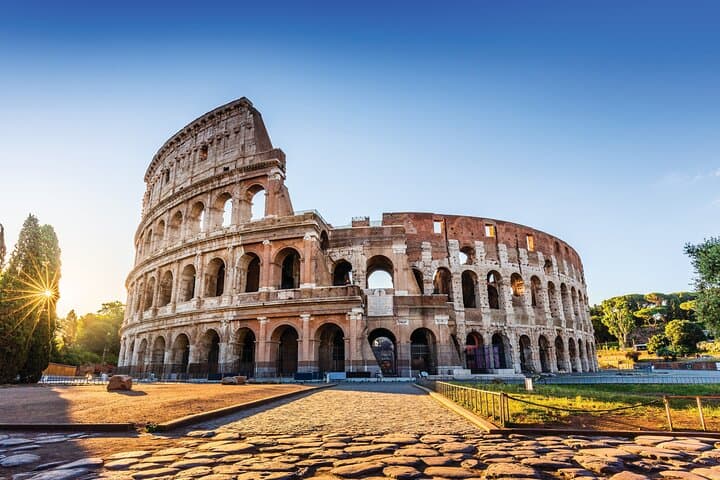
The Colosseum, built between 70 and 80 AD under the Flavian emperors, is Rome’s largest ancient amphitheatre and a symbol of Imperial Roman engineering and entertainment.
The Circus Maximus, an ancient Roman chariot-racing stadium, is a monumental symbol of Rome's architectural and cultural achievements, serving as the largest entertainment venue in the city.
The Mouth of Truth, or Bocca della Verità, is an ancient Roman marble mask with a rich history and legendary status, believed to reveal liars by supposedly biting off their hands.
The Orange Garden, or Giardino degli Aranci, is a historic park on Rome’s Aventine Hill, blending medieval fortifications, Dominican heritage, and 20th-century landscape design.
Highlights
What's included
Pickup Locations & Times
Your driver will be there at the meeting place holding a company logo and play card with your name on it .
Traveller Ratings
Important Information
- Wheelchair accessible
- Infants and small children can ride in a pram or stroller
- Public transportation options are available nearby
- Specialized infant seats are available
- Transportation options are wheelchair accessible
- All areas and surfaces are wheelchair accessible
- Suitable for all physical fitness levels
Reviews(2)
Night time is the absolute best way to see Rome . The crowds are far less and the lights are amazing against the attractions.
Thank you so much for your wonderful review.
The BEST way to see Rome. Got to visit all the major attractions lit up at night with almost no crowds. Great refreshing way to see it all without all the walking!
Thank you so much for your wonderful review.