LISBON PRIVATE SUNSET TOUR in Vintage Jeep with FOOD & DRINKS
Description
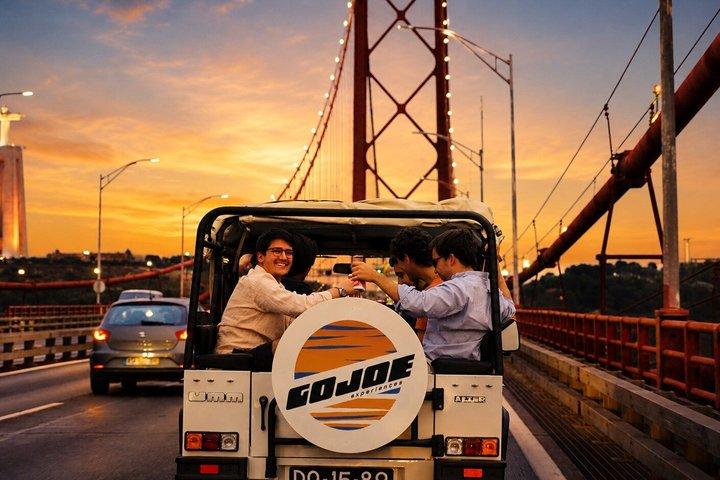
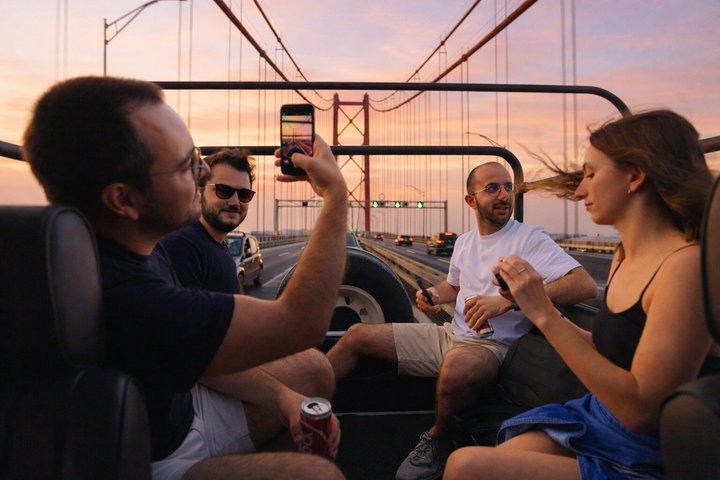
Experience the charm of Lisbon at sunset and by night in a vintage convertible jeep, guided by a local who knows every corner of the city. This exclusive, PRIVATE EXPERIENCE takes you through Lisbon’s most stunning spots as the sun sets, offering breathtaking panoramas as the city transitions to night. Along the way, you'll enjoy a selection of typical Portuguese food and drinks at charming locations, with the menu sent to you after booking so you can choose and share with your group. We’ll pick you up at your chosen location and drop you off wherever you'd like, giving you the option to continue exploring Lisbon's famous nightlife. And don’t worry, we know just the right places for you! ;) To top off your adventure, capture the moment with a postcard-worthy photo that you can send to anyone, anywhere. Come and feel the magic of Lisbon like never before! Follow us on Instagram @gojoe_experiences and customize your experience even further!
Tour Options
Itinerary
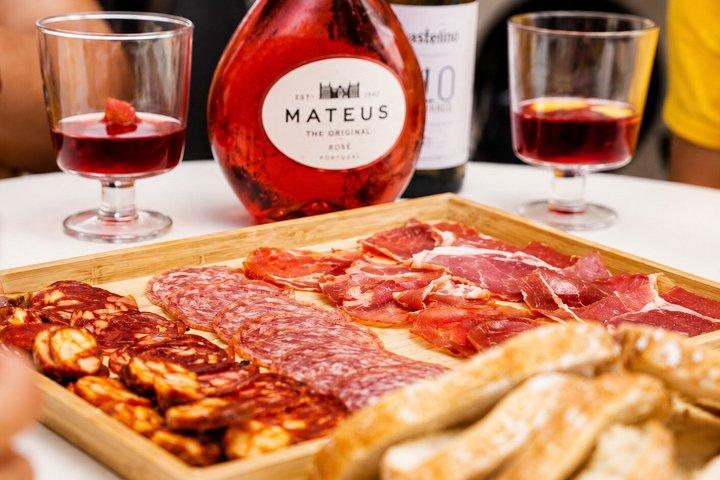
Parque das Nações is located in an area of Lisbon that was completely rehabilitated to host the 1998 World Exhibition, dedicated to the theme "The Oceans". Before there was a Parque das Nações or an International Expo in Lisbon, the eastern part of the capital was a completely different scenario. Expo 98 was one of the most important events in the city's history and was even considered by the Bureau International des Expositions itself as the best international exhibition ever. Food Services: Portuguese Cheese Plater wirh Red Sangria and Portuguese Cold Cuts Plater with Rosé Wine
The Museum of Art, Architecture and Technology. It makes the wide south façade work as a reflector in interaction with the light from the river. The mosaics create light effects depending on the time of year. The Central Tejo building is based at the former Lisbon Thermoelectric Power Station, which, for about 4 decades (1909-1951), supplied the city with energy. The facade of the building of undeniable beauty does not go unnoticed. What constitutes the permanent exhibition is the Central itself with the whole set of equipment that was part of the installation, such as the high-pressure boilers, fueled by coal, the ashtrays and the generators.
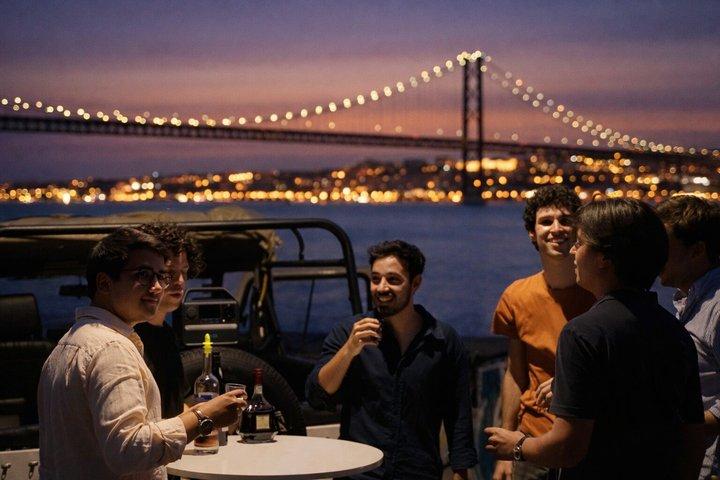
Cais do Ginjal represents the facade of this Municipality to the heart of Lisbon and the entire metropolitan area. It is one of the main views of Almada over the city of Lisbon. Food Service: Tradiconal Portuguese Fries with Green Wine, Fish dish with White Wine, Meat Dish with Red Wine and Dessert with Ginjinha tasting
Opened in 1882, this park, originally called Parque da Liberdade, is located opposite Avenida da Liberdade. In 1903, the name was changed in honor of the King of England, who visited Portugal with the aim of strengthening the Luso-British alliance. It has one of the best views over the city. Drink tasting experiences.
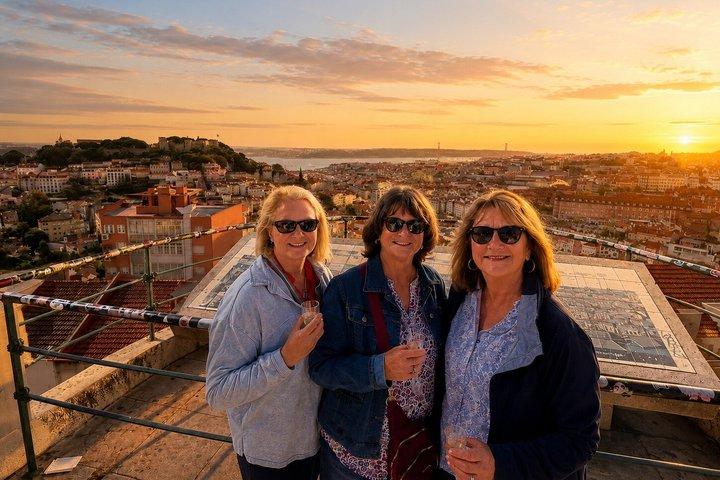
The S. Gens site - also known as Monte de S. Gens - is a very ancient place of worship, and it is likely that the little chapel there is of Visigoth origin, if not Paleochristian. Its current formulation dates from 1796, having been reconstructed after the Earthquake. Inside, on the right side of the church, protected by a wooden door that leads to a small cubicle, is the famous chair of St. Gens on which, according to legend, the holy bishop, the first bishop, would have sat. of the city, about 290 A.D. It is a monolith marble, polished and ergonomically shaped, worn by time and where pregnant women usually sit, praying to ask for a good delivery. It is probably the most magnificent view point of the city. We are going to have were one of the drink tastings. Drink tasting experience. Drink tasting experience.
The S. Gens site - also known as Monte de S. Gens - is a very ancient place of worship, and it is likely that the little chapel there is of Visigoth origin, if not Paleochristian. Its current formulation dates from 1796, having been reconstructed after the Earthquake. Inside, on the right side of the church, protected by a wooden door that leads to a small cubicle, is the famous chair of St. Gens on which, according to legend, the holy bishop, the first bishop, would have sat. of the city, about 290 A.D. It is a marble monolith, polished and ergonomically shaped, worn by time and where pregnant women usually sit, praying to ask for a good delivery. It is probably the most magnifecent view point of the city. We are going to have were one of the drink tastings. Drink tasting experience.
This will be the best place to enjoy the view over the Castle, Baixa and the Tagus River. We are going to have were one of the drink tastings.
Natural sources, although abundant especially in the oldest part of Lisbon, were not enough to provide water for the entire population. Concerns about the city's hygiene were growing and, in the reign of King João V, the situation was close to collapse. The population flocked to the old fountains, where disputes continued, sometimes with great violence. The cost of obtaining water, often referred to by foreigners who visited Lisbon, was enormous and the water carriers reached extremes of speculation. In 1731, King D. João V. ordered the construction of the Águas Livres Aqueduct. With the aim of bringing water from Sintra to the Mãe d'Água Reservoir, which stored and distributed it to all the fountains and fountains in the city. Just passing.
Built with the deck 70 meters high, which houses the road and railway routes, and with the main pillars of the bridge reaching a height of 190 meters, this completely changes the relationship between the two banks. The new bridge has completely changed the territory and the skyline of Lisbon and the Tagus estuary, it is the crown of the city and one of the great symbols of the progress of the city and the country, which are modernizing at its expense.
It was here that Vasco da Gama attended mass before leaving with his fleet to discover the sea route to India. Considered a UNESCO World Heritage Site since 1983. The Jerónimos Monastery is one of the most beautiful and imposing monuments of Manueline architecture in Lisbon. The monument, in lias limestone, was built from 1501 onwards, at the request of King Manuel I, for the members of his dynasty to gather there. Construction was subsidized by revenues from trade in Africa and the East. Just passing by.
It was here that Vasco da Gama attended mass before leaving with his fleet to discover the sea route to India. Considered a UNESCO World Heritage Site since 1983. The Jerónimos Monastery is one of the most beautiful and imposing monuments of Manueline architecture in Lisbon. The monument, in lias limestone, was built from 1501 onwards, at the request of King Manuel I, for the members of his dynasty to gather there. Construction was subsidized by revenues from trade in Africa and the East. Just passing by.
Luís Vaz de Camões was an extraordinary poet, becoming one of the most important references of literature in the Portuguese language. He was in India and Macau and was the victim of a shipwreck, during which he lost all his possessions, saving himself by swimming with the manuscript of Os Lusíadas. When he returned to Portugal, in 1569, he prepared the publication of Os Lusíadas, an epic poem dedicated to King D. Sebastião. The Monument to Camões, inaugurated in 1867, is the first monument of urban sculpture to be erected in Lisbon, after the Equestrian Statue in Praça do Comércio.
Sebastião José de Carvalho e Melo (1699-1782), who became known by the name Marquês de Pombal, was appointed Minister of the Kingdom by King José I. On November 1, 1755, a violent earthquake devastated the lower part of the city of Lisbon. The Marquês de Pombal took immediate action: he ordered the dead to be buried and the wounded to be helped; he ordered the city to be watched to prevent thefts and commissioned a team of architects to draw up a plan for the reconstruction of the city. This is how, less than a year after the calamity, Lisbon was already partially rebuilt.
It is one of the oldest and busiest in Lisbon. This square, where fairs, bullfights, festivals, popular revolutions and uprisings of faith were held, was largely destroyed during the 1755 earthquake. Several buildings disappeared almost completely, resulting in subsequent reconstruction with new Pombaline buildings and a rectangular square. In 1846, construction began on the Teatro Nacional D. Maria II, which would embellish the square with an imposing facade in neo-Paladian style. In the center, a statue of D. Pedro IV, the first emperor of independent Brazil, was placed.
Built in 1147, this religious building is the most important in the city Built over a Muslim mosque, after the conquest of Lisbon. Its architecture is inspired by the Romanesque Cathedral of Coimbra, visible on the façade with two bell towers, reminiscent of a kind of fortress, as well as the magnificent rose window in the centre. However, the current cathedral presents a mixture of styles, due to the successive modifications it has undergone over time, Romanesque, Gothic and Baroque. The most precious piece is the chest that contains the remains of St. Vincent, patron saint of the city.
The temple has a plan in the shape of a Greek cross and is topped by a majestic dome. Considered the most beautiful Baroque monument in the city, in 1916 it became the National Pantheon, where some of the great figures of Portuguese history lie. Amália Rodrigues, Eusébio, Sophia de Mello Breyner, Almeida Garrett.
Terreiro do Paço, current Praça do Comércio was built in 1515, nicknamed as a reference to the Royal Palace that King D. Manuel King of Portugal had built there for the royal residence. Already since the century. During the 15th century, at the time of the discoveries, this was a central point of Lisbon life, where processions, acts of faith, bullfights, markets and festivities took place. Since then it has continued to be one of the most important seats of power in Portugal. In 1775, with the earthquake that devastated the then Terreiro do Paço, this was transformed and gave way to Praça do Comércio, with its rigid and upright geometry that exists today. As part of the reconstruction plan for Baixa de Lisboa, carried out by Marquês de Pombal after the earthquake.
In this place, countless vessels will be built over the centuries, including ships that were protagonists in the famous Portuguese maritime discoveries, and that boosted the phenomenon of globalization. Today it is a kind of extension of Terreiro do Paço as it connects it to the Tagus River.
The palace maintained the role of Royal House until the establishment of the Republic in 1910, when it became the official residence of the Head of State. Although not all presidents reside in the palace, it has been used to receive political and state visits. Whenever the President of the Republic is present, a green flag with the national coat of arms is hoisted.
During EXPO'98, the building was designated Pavilhão da Utopia, then Pavilhão Atlântico and now Altice arena after the naming rights were purchased by the telecommunications company. The shape also refers to the horseshoe crab, which represents the oldest animal group that still lives on Earth. The wooden beams that support the roof make the interior look like the hull of a ship, namely that of an inverted 16th century ship.
Lisbon Oceanarium originally Pavilhão dos Oceanos It was built and inaugurated within the framework of Expo 98, the last world exhibition of the 20th century, with the theme "The Oceans, a Heritage for the Future". It is a reference public aquarium in Lisbon, Portugal and the world, being considered the second largest aquarium in Europe. It annually receives about 1 million visitors, which makes it the most visited cultural facility in Portugal.
Highlights
What's included
Pickup Locations & Times
The driver will arive 15 min before your scheduled pickup time. The driver will wait a maximum of 1h. The place and time is decided by the customer. After booking, we send you a message so that we can arrange the meeting point and the hours.
Traveller Ratings
Important Information
- Service animals allowed
- Public transportation options are available nearby
- Not recommended for travelers with spinal injuries
- Not recommended for pregnant travelers
- Suitable for all physical fitness levels
- Extra time will be spent explaining the history of the Museum and other monuments inside the Jeep.
Reviews(21)
Our vintage Jeep tour with João from GoJoe Experiences was hands-down one of the highlights of our time in Lisbon. João was the perfect guide: knowledgeable, friendly, and passionate about sharing his city. We stopped at breathtaking miradouros with panoramic views over Lisbon, sampled delicious Portuguese drinks along the way, and discovered hidden gems we never would have found ourselves. The combination of stunning scenery, and alcohol tastings, and João's infectious enthusiasm made for an unforgettable experience. Highly recommended for anyone wanting to experience Lisbon in a unique and authentic way!
An excellent day trip for anyone looking to see the “highlights” of Lisbon in a short period of time. Guide knew about the history and culture and spoke excellent English.
We had such a great time on this tour João is AMAZING! He tailors each tour to his clients’ wishes. The day we originally had scheduled was rainy so Joao offered to reschedule for the next day. The weather the day of our tour was perfect. The sunset/evening option was so unique. We watched the sunset from the Christo Rei and then travelled back across the bridge to enjoy a picnic and view more of the sights. My favorite was the Padrão dos Descobrimentos at night. There was barely anyone else there and it was so beautiful in the dark. We ended the night with a fresh/warm pastel de nata from Pasteis de Belem. All in all a perfect evening. Thank you, João!
Fun, informal tour of Lisbon that offered excellent value. We covered so much of city with João (guide) and he was great!
Best of Lisbon I could get a better experiences if GoJoe and João wasn’t there. I totally recommend! The food the jeep the guide everything was perfect 🤩
What way to see Lisbon. It was thoroughly a wonderful way to spend our last night in Portugal. João was a great host showing us the Lisbon that he loves.
We did our tour with João our first night in Lisbon and it was absolutely the best way to see the city! We were able to catch the sunset at the best spot looking over the city. João made some incredible bites and drinks for us to enjoy, as well. We put some old school tunes on and got to cruise the city. This adventure is an absolute must!
I recently toured with Gojo Experiences and had an awesome time! The guides were knowledgeable and friendly, making the trip enjoyable. The itinerary was well-planned, highly recommend!
Excellent experience, our guide's attention was always 100%, we loved the tour, the views and especially what was served to us. I recommend it to anyone who wants to visit Lisbon in a different way.
We got to know the beautiful city of Lisbon with an amazing tour guide and eat delicious typical dishes! I would certainly recommend it!