Puebla Audio Guided Walking Tour 3h and 26 Audio Comments
Description
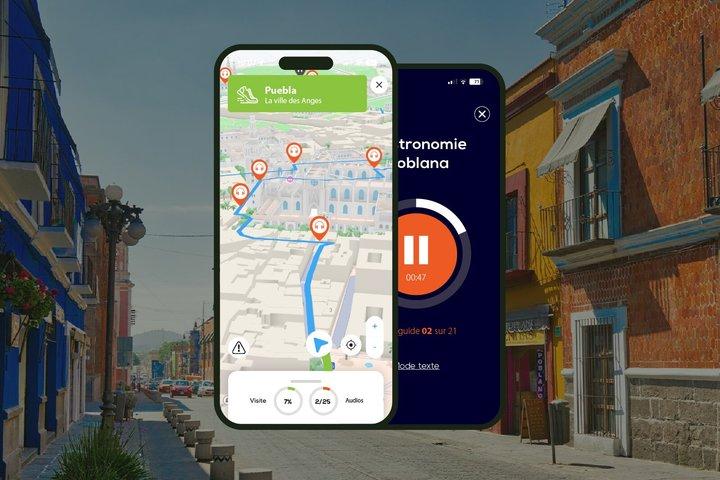
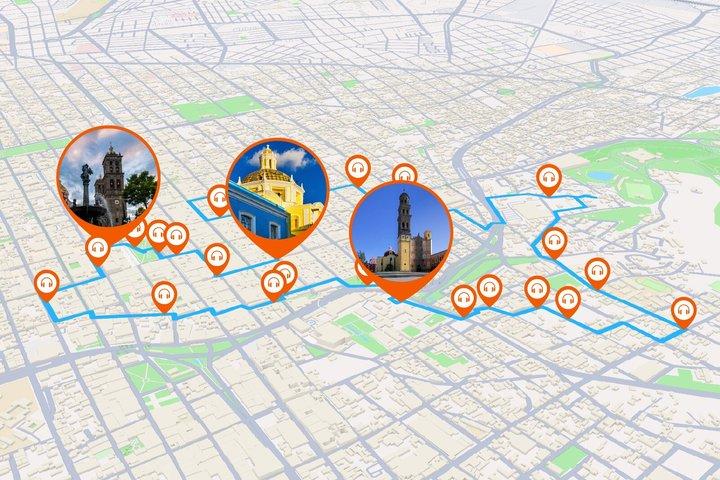
Puebla, the City of Angels, offers a fascinating journey through Mexican history, colonial architecture and gastronomy. This 3-hour tour takes you on foot to explore 26 iconic sites, such as the UNESCO World Heritage Cathedral-Basilica, the vibrant Zócalo, and the Amparo Museum. Enjoy baroque architecture at Casa de los Muñecos while discovering the culinary delights of Puebla. This route is perfect for history and culture lovers who want to explore the richness of Puebla in depth in a single day. - Walking tour of 7.5 km lasting 3 hours - Discover historical sites, churches and museums - Enjoy local gastronomy in markets and alleys - Learn from the interactive audio guides available
Tour Options
Itinerary
This iconic library was installed in a former college. Emblematic, because it is considered the first public library in America.
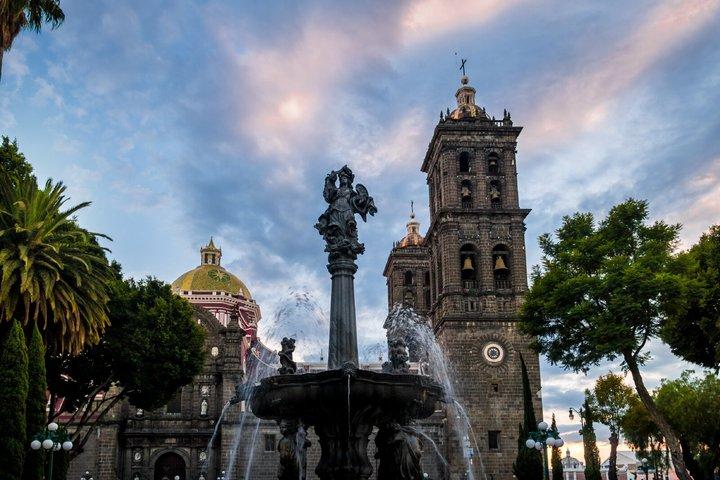
You have arrived in front of the huge and beautiful Puebla Cathedral. I will announce it immediately, it is classified as a UNESCO World Heritage Site.
In Mexico, the Zócalo refers to the main square of a city. For Puebla, it is the most important since the city was founded in the 16th century.
This magnificent building is the Puebla Municipal Theatre. It was built between 1862 and 1868 thanks to the businessman Ignacio Guerrero y Manzano, to allow the inhabitants to see plays and operas in a very specific place, which also reflects the grandeur and wealth of the city.
On your right, the pretty building that corners the Zocalo is a university museum called Casa de los Muñecos, which means House of Dolls in French. It is one of the finest examples of Baroque architecture in the city, built in the 18th century.
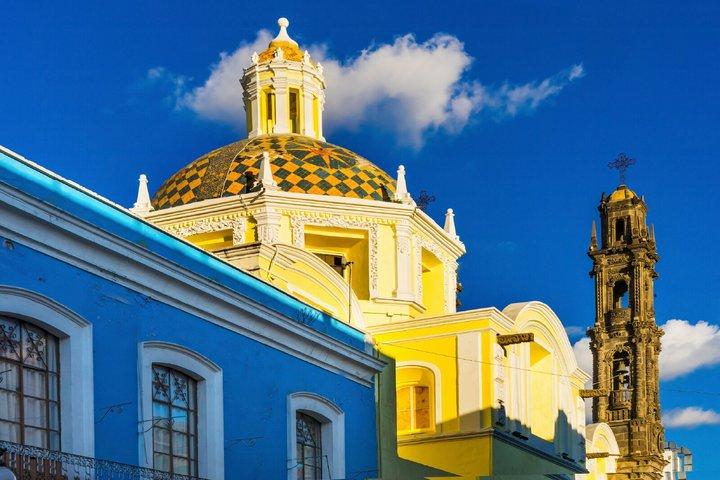
The ochre façade along the street you are in belongs to the Church of San Pedro Apostol, one of the many religious buildings in the city.
You arrive in front of the San Cristobal temple. At first, when it was built in 1604, it was only a simple chapel that was attached to the hospital that was right next door.
Here is a museum that traces one of the major events in Mexican history: the Revolution. It was between 1910 and 1920 that these numerous military uprisings and conflicts took place to overthrow the dictatorship of Porfirio Diaz, who has ruled the country since 1876.
You may already know this, but Puebla is the queen of Mexican cuisine, especially sweets of all kinds much appreciated by locals – and visitors, at the same time.
After the Franciscans, it was the Dominicans who arrived in the city and decided to build their church here from 1571. It will be completed in 1611.
You are here in Avenue 5 de Mayo, a street whose name pays tribute to one of Puebla’s historic events.
It’s hard to miss this magnificent building because its ochre color is so vivid in the streets of Puebla! This is the San Juan de Dios temple, which once stood next to an old hospital.
This red brick façade belongs to the Church of San José, dedicated to Saint Joseph, whose worship was chosen to fight lightning, which caused much damage in the city.
Here you are in the heart of the Xanenetla district, famous throughout the city for its magnificent murals. Very different from the others, this neighborhood was once a place where natives sold bricks and pottery to settlers.
Puebla is a beautiful colorful city with a charged history, but it is also a destination of choice for all those who wish to discover Mexican gastronomy.
This fountain is a must of Puebla! Not for its beauty, although it is quite original, but because it inspires one of Puebla’s most famous legends.
The Alto district is an ancient indigenous district, where the Mixtecs lived before the arrival of the Spanish. It is here that the city was founded in 1531.
Part of the reason why the Alto district is so popular today is because of the murals scattered throughout its streets.
Behind you is the magnificent façade of the Holy Cross parish, another church worth a visit! Bishop Manuel Fernandez de Santa Cruz ordered its construction and laid the foundation stone for the building in 1693.
This is a building that can’t be missed in Puebla! It is nothing more than the Covered Point of Sale in the Alto district, which has been here since 1930.
Here you are in front of the first convent built in the city of Puebla, the convent of San Francisco. Construction of this building began in 1535, when the city had just been founded.
This chapel has a history that ties in with its name. When the city of Puebla was founded, a bridge was built just in front of the convent of San Francisco.
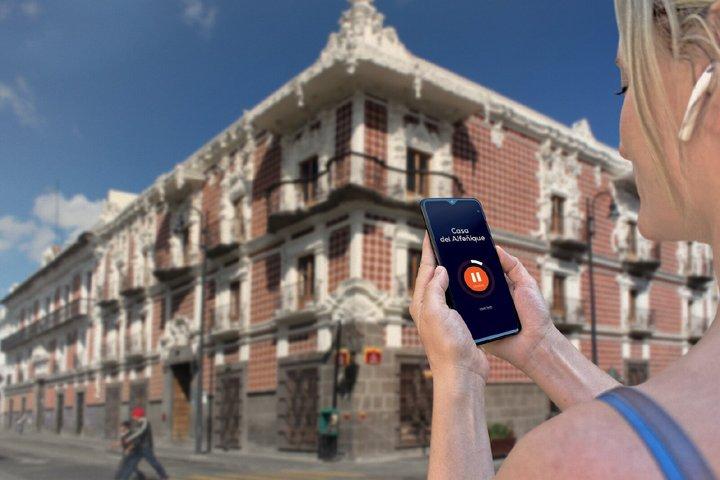
On your right stands Casa del Alfeñique: do not hesitate to go a little further and enter the street on the right, you will have a better glimpse.
Here you are on a busy street in Puebla. Livened up by its daily Point of Sale, here called El Parian, this alley is the best place to find all the traditional objects of the area.
El callejón de los Sapos, or in French “Allée des Toads”, is aptly named, because it seems that during the colonial era it was frequently invaded by toads, due to the many floods of the river that flowed just next door.
The building on your right is one of Puebla’s most famous museums. It is named after Amparo Rugarcia, the wife of Mexican businessman and philanthropist Manuel Espinosa Yglesias, who wished to pay tribute to him after his death.
Highlights
What's included
Important Information
- Service animals allowed
- Public transportation options are available nearby
- Suitable for all physical fitness levels