Private Golf Cart Tour Rome – Comfort, Privacy & Custom Routes
Description
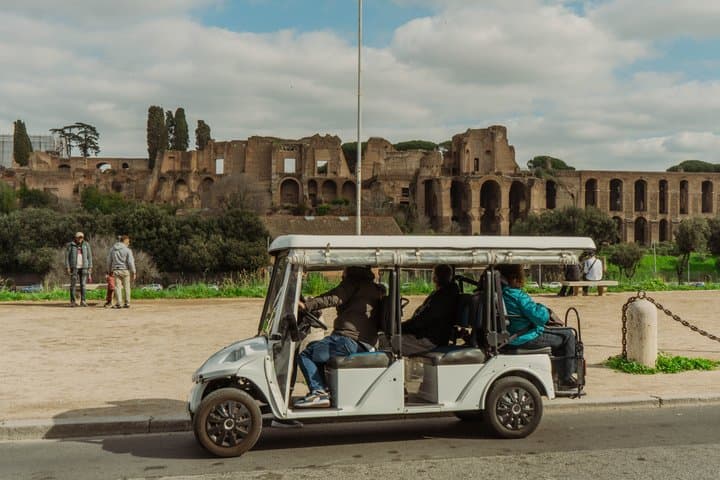
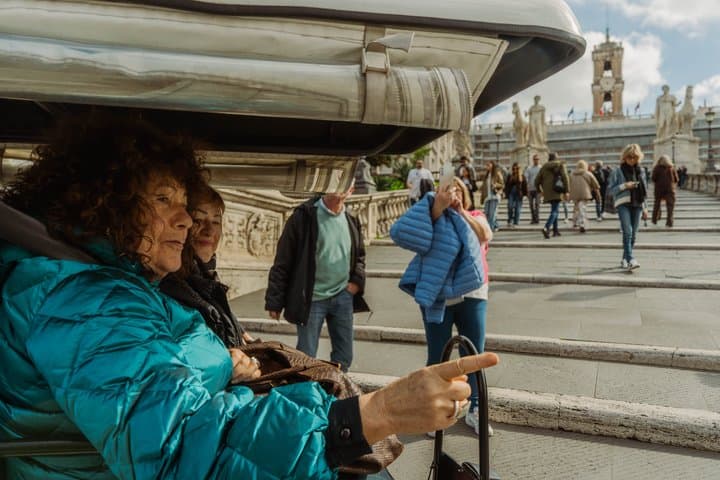
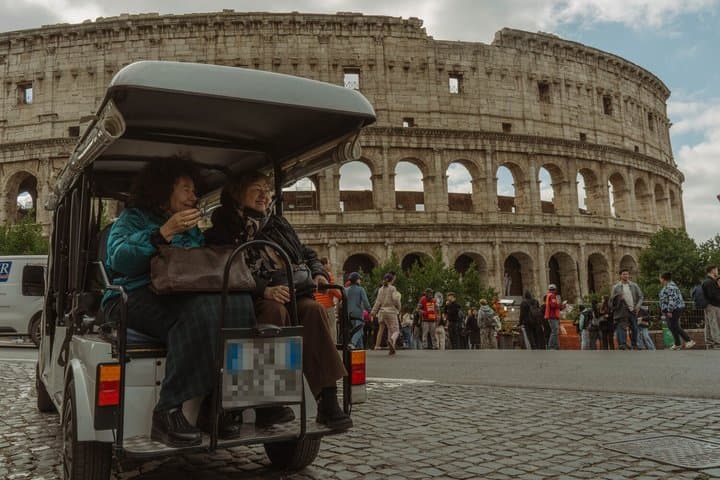
See Rome’s must‑see sights in just 2 hours on a comfortable golf cart tour—perfect if you want maximum highlights with minimal walking. Starting near the Vatican (Via Tunisi area), you’ll glide through historic streets and iconic piazzas, with time for photos and quick stops along the way. This tour is designed as a fast, fun introduction to the Eternal City: ancient Rome, Baroque masterpieces, and the most famous fountains and squares—ideal for first‑timers, families, and anyone short on time.
Tour Options
Itinerary
We start from Via Tunisi in the Prati district, just minutes from the Vatican Museums. Here you immediately feel Rome’s double identity: the “modern” late-19th-century city and, nearby, the spiritual and artistic heart of the Vatican. The Vatican Museums began in 1506, after the discovery of the famous Laocoön sculpture group, when Pope Julius II launched a collection that kept growing for centuries. Today the route leads to the Sistine Chapel, painted by Michelangelo between 1508 and 1512.
Castel Sant’Angelo was built as the mausoleum of Emperor Hadrian, around AD 123–139: a monumental tomb overlooking the Tiber. Over time it became a strategic fortress, a prison, and a refuge. Its connection to the Vatican is strong thanks to the Passetto di Borgo, a fortified corridor that allowed popes to reach the castle in times of danger. The name “Sant’Angelo” recalls a tradition from 590, when Pope Gregory the Great is said to have seen the Archangel Michael sheathing his sword, signaling the end of a plague.
Piazza Navona’s elongated shape is no coincidence: it follows the outline of the Stadium of Domitian, built around AD 86 for athletic competitions. Where you now see palaces and cafés, there were once grandstands and races. In the 1600s the square became a Baroque masterpiece: Bernini’s Fountain of the Four Rivers dates to 1651 and represents four great rivers as symbols of the continents known at the time. Nearby, Sant’Agnese in Agone completes the scene with Roman Baroque elegance.
The Pantheon is one of the best-preserved ancient buildings in the world. The version we see today was rebuilt under Hadrian and completed around AD 125. Its dome is a masterpiece of engineering: for centuries it was the largest in the world, and it remains the largest unreinforced concrete dome ever built. At the center is the oculus, an opening that lets in light and air. When it rains, water falls inside, but the floor is designed with subtle slopes and drains. In AD 609 it was converted into a church, which helped preserve it. The painter Raphael (died 1520) is also buried here.
The Trevi Fountain is Rome’s grand water theatre. It was completed in 1762, designed by Nicola Salvi (work began in 1732), and it marks the endpoint of the Acqua Vergine aqueduct, originally built in 19 BC. The central statue represents Oceanus, surrounded by symbolic figures linked to abundance and health. The coin-toss tradition is modern but world-famous: throwing a coin means you’ll return to Rome.
Piazza Venezia is a key junction in modern Rome. The Vittoriano dominates the square, dedicated to Victor Emmanuel II, the first king of unified Italy. Construction began in 1885 and it was inaugurated in 1911, when Italy wanted to express national identity through monumental architecture. Inside is the Tomb of the Unknown Soldier, established in 1921, a symbol commemorating those who died in World War I. It’s also an outstanding viewpoint over the city.
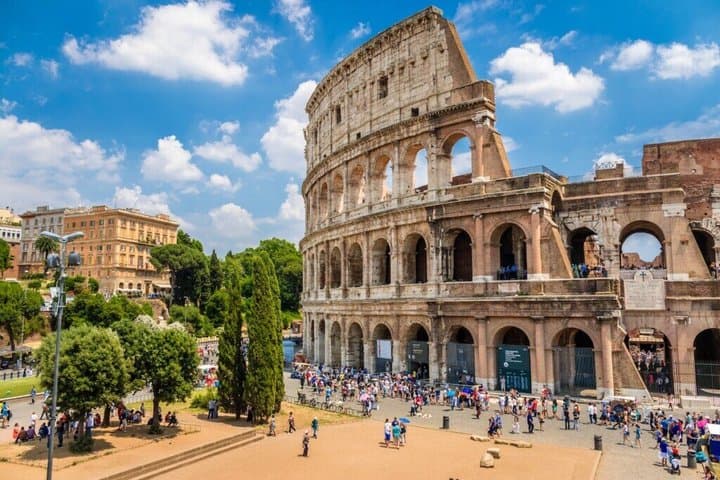
The Imperial Forums were the political heart of the Empire. Julius Caesar’s forum was inaugurated in 46 BC, Augustus’ in 2 BC, followed by the forums of Nerva and Trajan: a sequence of monumental squares that reflect imperial ambition. The Colosseum, also known as the Flavian Amphitheatre, was inaugurated in AD 80 under Titus, after construction began under Vespasian. It could host tens of thousands of spectators and ran with impressive logistics: numbered entrances, corridors, and an underground system for scenery and animals.
Highlights
What's included
Traveller Ratings
Important Information
- Service animals allowed
- Public transportation options are available nearby
- Suitable for all physical fitness levels