Pompeii and Herculaneum Small-Group with an Expert Archaeologist
Description
Discover two of the world’s most extraordinary Roman archaeological sites—Pompeii and Herculaneum—on a guided experience led by a professional archaeologist. These ancient cities, buried by the eruption of Mount Vesuvius in AD 79, come to life as your expert guide explains their history, architecture, and daily life in remarkable detail. Skip the stress of navigating maps or planning logistics: this tour includes assistance during the transfer between Pompeii and Herculaneum and provides priority access to both sites. Walk through villas, temples, baths, and beautifully preserved homes as your archaeologist unveils stories hidden in the ruins. Designed to offer depth, clarity, and an unforgettable cultural experience, this tour lets you explore the highlights of both archaeological sites comfortably and efficiently.
Tour Options
Itinerary
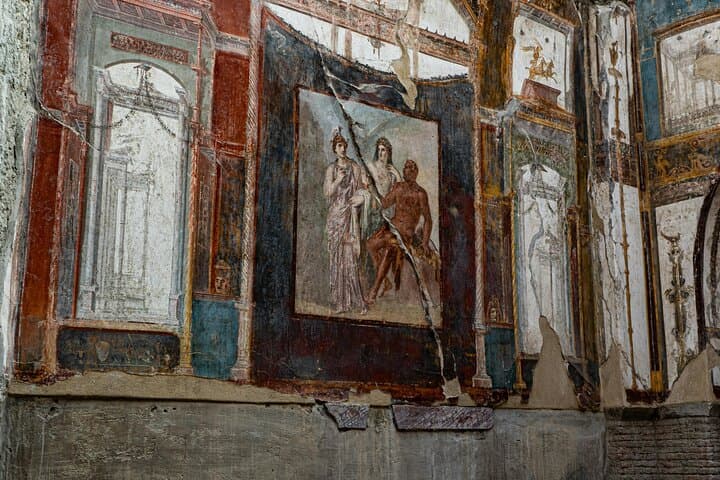
Pompeii is an extraordinary archaeological site, an ancient Roman city preserved by the eruption of Mount Vesuvius in 79 AD. During your visit to Pompeii with the guide in two and a half hours, you will discover its most famous areas frescoes.
Have a look of the so called Teatro Piccolo of Pompeii.
Visit the most important Theater in Pompeii
The house of Menander is one of the richest and most magnificent houses in ancient Pompeii in terms of architecture, decoration and contents.
These occupy a vast area between the Brothel lane, the Holconius crossroads and the Via Stabiana. They represent the oldest thermal complex in the city.
Visit the most famous brothel in the ruined Roman city of Pompeii.
Via dell’Abbondanza
The house of Faun was one of the largest and most impressive private residences in Pompeii.
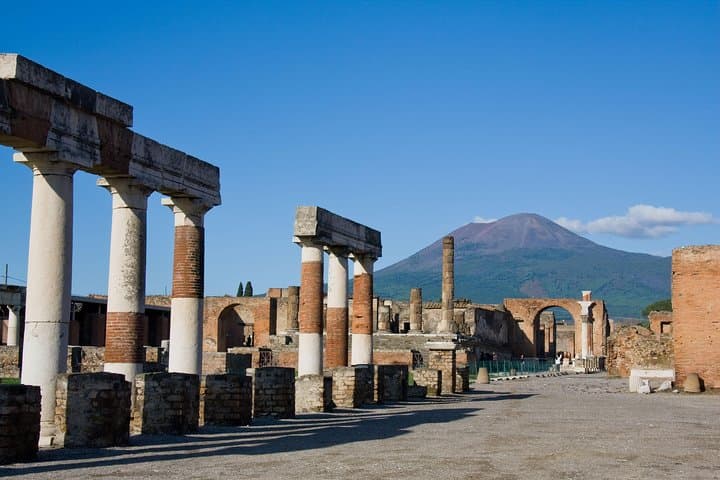
Have a look of the ancient main square of Pompeii.
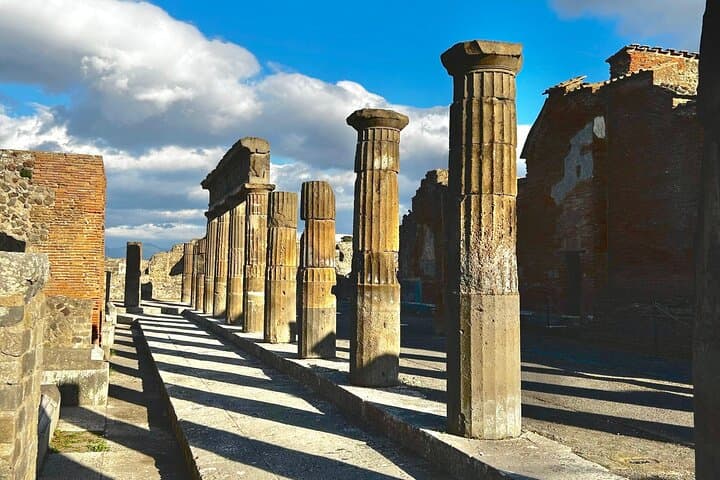
Basilica was an open portico that gave shelter to merchants and other activities.
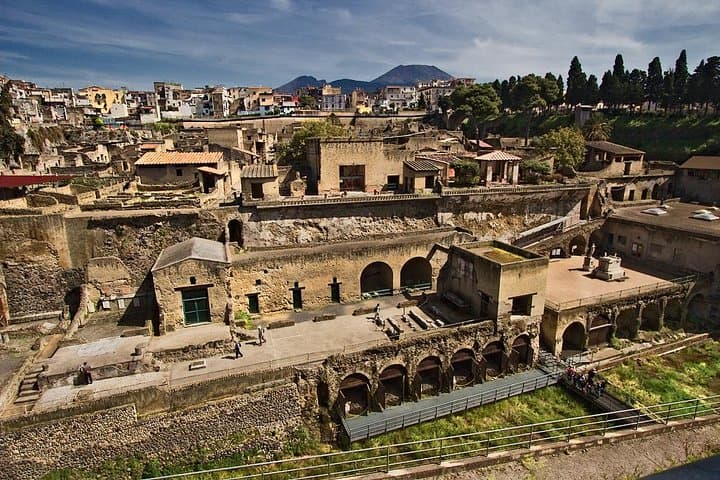
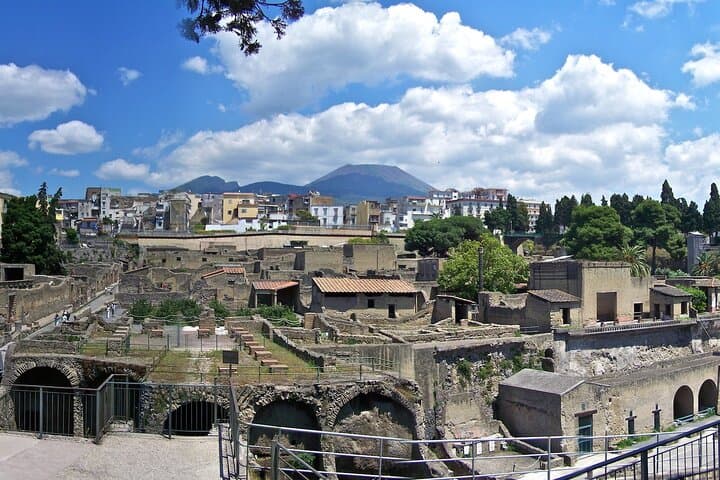
A quick lunch break is available before the transfer (own expense). After the visit of Pompeii, continue to Herculaneum. Here you will enjoy a two-hour guided visit of this remarkably well-preserved ancient town, where wooden structures, mosaics, and everyday objects survived the eruption, offering an intimate and vivid glimpse into Roman life.
The house receives its name from marble statues of stags/deer found in the peristyle.
M. Nonius Balbus was the city's major benefactor restoring and building many public buildings. On his death he was made patron and feted with many honours, detailed in the long inscription on his funeral altar.
It is thought that the building was a centre of the cult of the Emperor Augustus and the headquarters of the Collegium Augustalium (or possibly even the local curia).
The house possibly belonged to one of the town's leading benefactors, Marcus Nonius Balbus and is somewhat unusual in that it has its own private access to the adjoining Suburban Thermae to the south.
It is very important house for the elegant wooden partition remained.
The House of the Skeleton probably the aggregation of three smaller buildings, derives its name from the discovery of human remains in a second floor room in 1831.
The Central Thermae were built around the beginning of the 1st century AD and were divided, as was then the common practice, into men's and women's baths, each with their own separate entrances.
The house has an arrangement that was typical of the Samnites (an ancient people of the Sabine race who occupied this mountainous part of central Italy). The splendid atrium is skirted by a gallery with Ionic columns. The rooms are decorated with frescoes.
This is one of the most original houses in Herculaneum. It has a courtyard with a stairway and a stone balcony instead of an atrium.
Beautiful domus in the Centre of the archaeological area, with various environments, collonnati, frescos e-com everywhere at Herculaneum-charred remains of wooden parts.
Highlights
What's included
Traveller Ratings
Important Information
- Infants and small children can ride in a pram or stroller
- Public transportation options are available nearby
- Specialized infant seats are available
- Suitable for all physical fitness levels
- Minimum numbers of 6 people per Shared tour apply. There is a possibility of cancellation after confirmation if there are not enough passengers to meet requirements. In the event of this occurring, you will be offered an alternative or full refund.
- At Pompeii and Herculaneum Children under 18 y.o. enter for free, showing a valid form of ID.
- Please note that the drop-off point depends on the tour option you selected.