Paris Private First-Timers Tour: Iconic Landmarks & Crêpes
Description
In this 4 hour private walking tour with your local guide you will be visiting plenty of Paris landmarks while absorbing interesting and fun historical facts about places and monuments. During your stroll, you will make a pause at a great crêperie (crêpe bar) in the Latin Quarter for enjoying a crêpe menu (savory and sweet crêpes with a drink). You will admire places like Place Bastille, Place des Vosges in the Marais district, Notre-Dame Cathedral, Saint Michael's Fountain, the Latin Quarter, Saint Germain-des-Prés, Pont des Arts, the Louvre, the Tuileries Garden... After a quick metro ride with your guide from Place de la Concorde you will end the tour in front of the Eiffel Tower. A must-do tour for covering Paris main places and monuments in a few hours, and enjoying delicious french crêpes too !
Tour Options
Itinerary
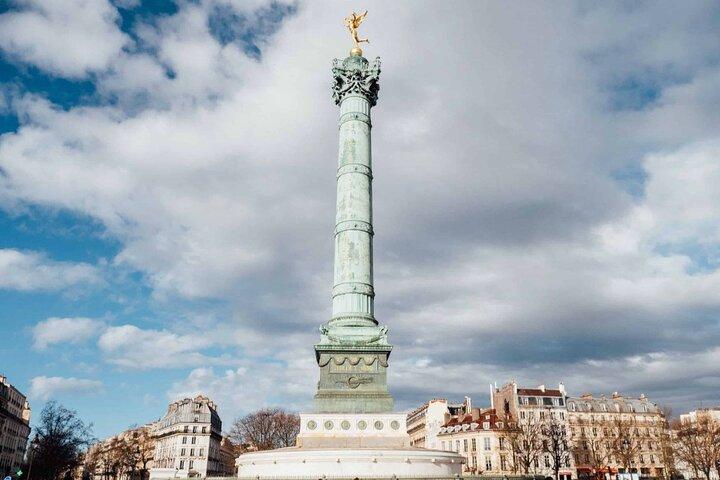
The Place de la Bastille is a square in Paris where the Bastille prison once stood, until the storming of the Bastille and its subsequent physical destruction between 14 July 1789 and 14 July 1790 during the French Revolution. No vestige of the prison remains. The square straddles 3 arrondissements of Paris, namely the 4th, 11th and 12th. The square and its surrounding areas are normally called simply Bastille. The July Column (Colonne de Juillet) which commemorates the events of the July Revolution (1830) stands at the center of the square. Other notable features include the Bastille Opera, the Bastille subway station and a section of the Canal Saint Martin. Prior to 1984, the former Bastille railway station stood where the opera house now stands.
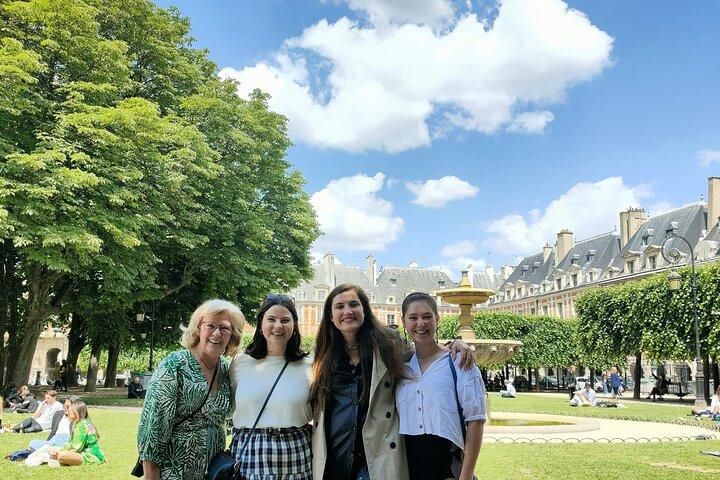
Place des Vosges, originally Place Royale, is the oldest planned square in Paris, France. It is located in the Marais district, and it straddles the dividing-line between the 3rd and 4th arrondissements of Paris. It was a fashionable and expensive square to live in during the 17th and 18th centuries, and one of the main reasons for the chic nature of Le Marais among the Parisian nobility.
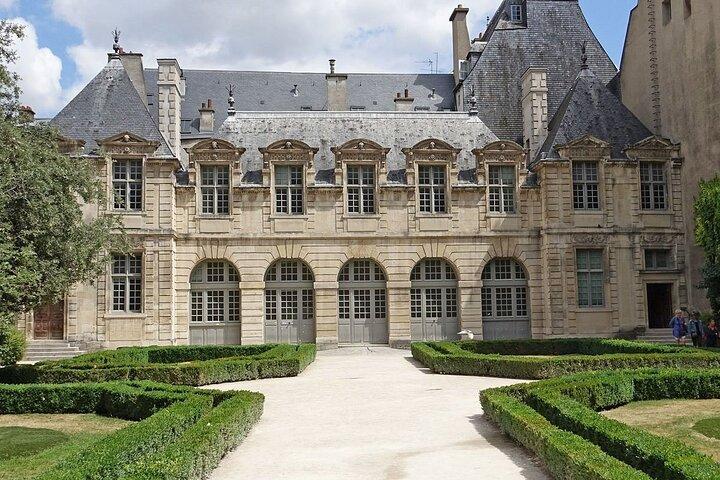
The Hôtel de Sully is a Louis XIII style hôtel particulier, or private mansion, located at 62 rue Saint-Antoine in the Marais, IV arrondissement, Paris, France. Built at the beginning of the 17th century, it is nowadays the seat of the Centre des Monuments Nationaux, the French national organization responsible for national heritage sites. It has been listed since 1862 as a monument historique by the French Ministry of Culture.
The Hôtel de Sens or Hôtel des archevêques de Sens is a 16th-century hôtel particulier, or private mansion, in the Marais, in the 4th arrondissement of Paris, France. It nowadays houses the Forney art library.
Notre-Dame de Paris ; meaning "Our Lady of Paris", referred to simply as Notre-Dame, is a medieval Catholic cathedral on the Île de la Cité (an island in the Seine River), in the 4th arrondissement of Paris. The cathedral, dedicated to the Virgin Mary, is considered one of the finest examples of French Gothic architecture. Several attributes set it apart from the earlier Romanesque style, particularly its pioneering use of the rib vault and flying buttress, its enormous and colorful rose windows, and the naturalism and abundance of its sculptural decoration.[5] Notre-Dame also stands out for its three pipe organs (one historic) and its immense church bells.
The Fontaine Saint-Michel is a monumental fountain located in Place Saint-Michel in the 6th arrondissement in Paris. It was constructed in 1858–1860 during the French Second Empire by the architect Gabriel Davioud. It has been listed since 1926 as a monument historique by the French Ministry of Culture.
Crêpe stop at a traditional french Crêperie.
Saint-Germain-des-Prés is one of the four administrative quarters of the 6th arrondissement of Paris, France, located around the church of the former Abbey of Saint-Germain-des-Prés. Its official borders are the River Seine on the north, the rue des Saints-Pères on the west, between the rue de Seine and rue Mazarine on the east, and the rue du Four on the south. Residents of the quarter are known as Germanopratins. The quarter's cafés include Les Deux Magots, Café de Flore, le Procope, and the Brasserie Lipp, as well as many bookstores and publishing houses. In the 1940s and 1950s, it was the centre of the existentialist movement (associated with Jean-Paul Sartre and Simone de Beauvoir). It is also home to the École des Beaux-Arts, Sciences Po, the Saints-Pères biomedical university center of the University of Paris, the School for Advanced Studies in the Social Sciences, and the Musée national Eugène Delacroix, in the former apartment and studio of painter Eugène Delacroix.
The Church of Saint-Germain-des-Prés is a Roman Catholic parish church located in the Saint-Germain-des-Prés quarter of Paris. It was originally the church of a Benedictine abbey founded in the 6th century, by Childebert I, the son of Clovis, King of the Franks. It was destroyed by the Vikings, rebuilt, and renamed in the 8th century for Saint Germain, an early Bishop of the city. It is considered the oldest existing church in Paris.
The Pont des Arts or Passerelle des Arts is a pedestrian bridge in Paris which crosses the River Seine. It links the Institut de France and the central square (cour carrée) of the Palais du Louvre, (which had been termed the "Palais des Arts" under the First French Empire).
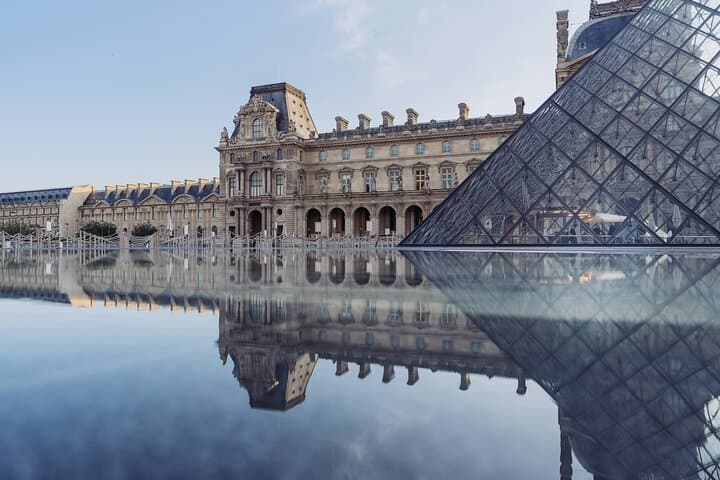
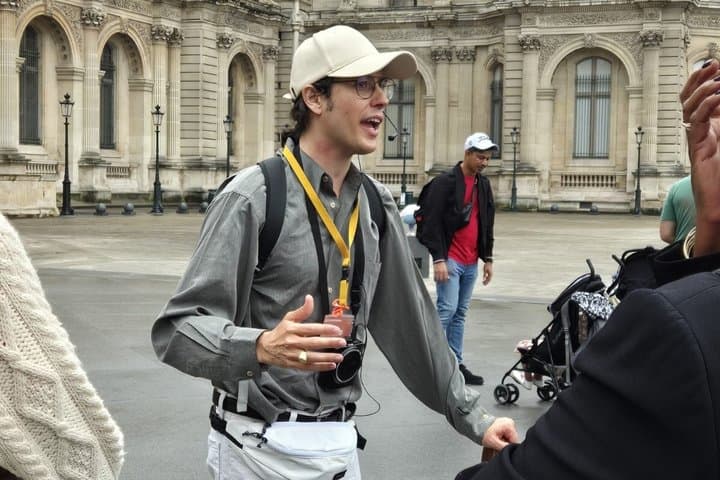
The Louvre is a national art museum in Paris, France. A central landmark of the city, it is located on the Right Bank of the Seine in the city's 1st arrondissement (district or ward) and home to some of the most canonical works of Western art, including the Mona Lisa and the Venus de Milo. The museum is housed in the Louvre Palace, originally built in the late 12th to 13th century under Philip II. Remnants of the Medieval Louvre fortress are visible in the basement of the museum. Due to urban expansion, the fortress eventually lost its defensive function, and in 1546 Francis I converted it into the primary residence of the French Kings.
The Arc de Triomphe du Carrousel (English: Triumphal Arch of the Carousel) is a triumphal arch in Paris, located in the Place du Carrousel. It is an example of Neoclassical architecture in the Corinthian order.[1] It was built between 1806 and 1808 to commemorate Napoleon's military victories in the Wars of the Third and Fourth Coalitions. The Arc de Triomphe de l'Étoile, at the far end of the Champs Élysées, was designed in the same year; it is about twice the size and was not completed until 1836.
The Tuileries Garden is a public garden located between the Louvre and the Place de la Concorde in the 1st arrondissement of Paris, France. Created by Catherine de' Medici as the garden of the Tuileries Palace in 1564, it was eventually opened to the public in 1667 and became a public park after the French Revolution. Since the 19th century, it has been a place where Parisians celebrate, meet, stroll and relax.
The Place de la Concorde is one of the major public squares in Paris, France. Measuring 7.6 ha (19 acres) in area, it is the largest square in the French capital. It is located in the city's eighth arrondissement, at the eastern end of the Champs-Élysées. It was the site of many notable public executions, including those of King Louis XVI, Marie Antoinette and Maximilien Robespierre in the course of the French Revolution, during which the square was temporarily renamed Place de la Révolution.
The Champ de Mars is a large public green space in Paris, France, located in the seventh arrondissement, between the Eiffel Tower to the northwest and the École Militaire to the southeast. The park is named after the Campus Martius ("Mars Field") in Rome, a tribute to the Roman god of war. The name alludes to the fact that the lawns here were formerly used as drilling and marching grounds by the French military. The nearest Métro stations are La Motte-Picquet–Grenelle, École Militaire, and Champ de Mars-Tour Eiffel, an RER suburban-commuter-railway station. A disused station, Champ de Mars, is also nearby.
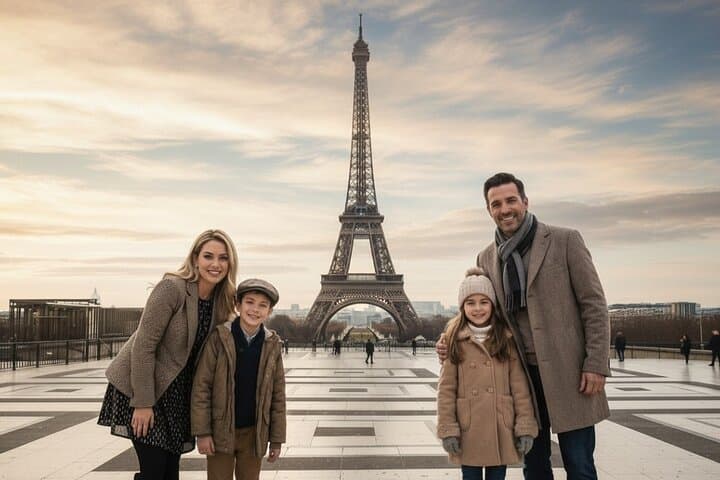
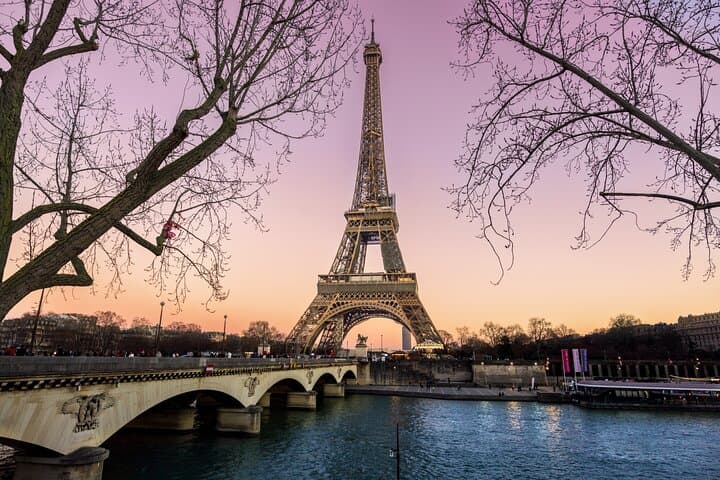
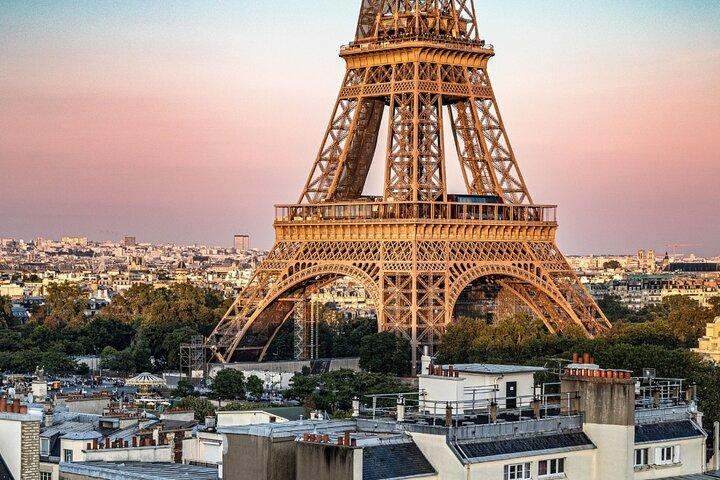
The Eiffel Tower is a wrought-iron lattice tower on the Champ de Mars in Paris, France. It is named after the engineer Gustave Eiffel, whose company designed and built the tower. Locally nicknamed "La dame de fer" (French for "Iron Lady"), it was constructed from 1887 to 1889 as the centerpiece of the 1889 World's Fair. Although initially criticised by some of France's leading artists and intellectuals for its design, it has since become a global cultural icon of France and one of the most recognisable structures in the world. The tower received 5,889,000 visitors in 2022, up by 197 percent from 2021, when numbers dropped due to the COVID virus. The Eiffel Tower is the most visited monument with an entrance fee in the world: 6.91 million people ascended it in 2015. It was designated a monument historique in 1964, and was named part of a UNESCO World Heritage Site in 1991.
Highlights
What's included
Traveller Ratings
Important Information
- Infants and small children can ride in a pram or stroller
- Public transportation options are available nearby
- Suitable for all physical fitness levels
Reviews(8)
The level of knowledge our tour guide demonstrated was impressive to say the least! Our tour was a perfect combination of tourist and local flavor. We were able to experience so many things that we would have never found on our own and learned so much about the history of this great nation.
Thanks for your positive review! We are delighted you enjoyed your tour with us :)
We saw famous spots like Place de la Bastille, the beautiful Tuileries Garden, and Saint-Germain-des-Prés. The guide shared interesting facts, and the crêpe stop in the Latin Quarter was amazing. The sweet and savory crêpes were so tasty, and finishing by the Eiffel Tower felt magical!
The tour covered so many landmarks, from Place des Vosges to the Arts Bridge. The crêpe tasting was a real treat – both the savory and sweet options were delicious. Our guide was great and made the trip enjoyable. Riding the metro to end the visit by the Eiffel Tower was a fantastic experience!
This tour was so much fun! We visited amazing places like the Notre-Dame Cathedral, the Louvre, and the Latin Quarter. Taking a break to try delicious savory and sweet crêpes at a lovely restaurant was a highlight. The guide was friendly and made everything easy to understand. Ending the day at the Eiffel Tower was perfect!
Awesome sites of Paris both famous, and off the beaten path. Great lessons on Parisian History. Best Crepes I have ever eaten.
Achraf our guide was excellent. He was very knowledgeable and told us things we would have never thought to ask but made for an interesting learning experience. We stopped at a great creperie along the way too. We were able to see all the sights of Paris and get some great pictures too. Achraf was very attentive and personable as well. I would highly recommend this tour. It’s a great value too.
Our Paris tour was simply perfect! 🇫🇷 The guide was so friendly and knowledgeable, taking us through the best spots like the Louvre and the Eiffel Tower. The crêpe break was a delightful surprise, giving us a true taste of Paris. 🥐 Highly recommend this tour for anyone visiting the city!