Fascist Rome Tour - The Phantom of Mussolini
Description
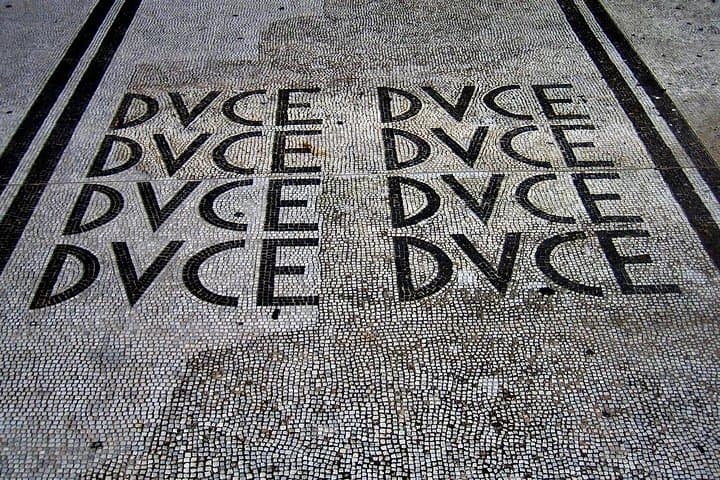
Architecture was Mussolini's favorite mode of propaganda, and he commissioned monumental projects like the Foro Italico and E.U.R., a vast state office park that includes the stark Palazzo della Civilta del Lavoro, known as the square Coliseum. While the name of Mussolini has been scratched out or sculpted over most of what he had hoped would be immortalized, there are still countless fascist remnants in the Italian capital today, from his former home in the Villa Torlonia to the E.U.R. district. Many blend in so seamlessly, it’s easy to forget what they once stood for. But we Romans have no intention of erasing any aspect of our city’s past. Instead, the fascist era and its architecture have just become another layer in Rome’s multi-faceted history.
Tour Options
Itinerary
Piazza Venezia was the location of public speeches given by the Italian dictator Mussolini to crowds of Italians in the 1920s-1940s. Benito Mussolini used the Palazzo Venezia as his headquarter and addressed the people from the palace's balcony.
Old Medieval area disemboweled by Mussolini
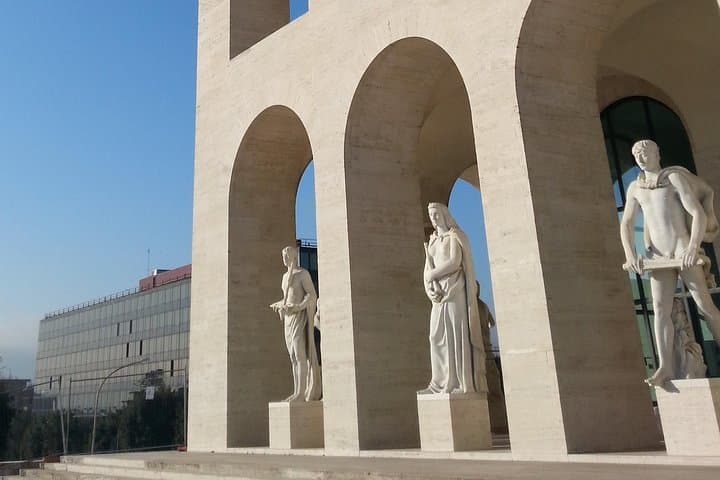
Allso known as the Palazzo della Civiltà del Lavoro or simply the Colosseo Quadrato (Square Colosseum), is a building in the EUR district in Rome. The building was designed in 1937 to host the Mostra della Civiltà Romana during the 1942 World Fair by Italian architects Giovanni Guerrini, Ernesto Bruno La Padula and Mario Romano. It lies in the district of Rome known as the Esposizione Universale Roma (also known as 'E.42' and 'EUR'). It is particularly symbolic of this district, exemplifying its monumentality. The building is an example of Italian Rationalism and of Fascist architecture.
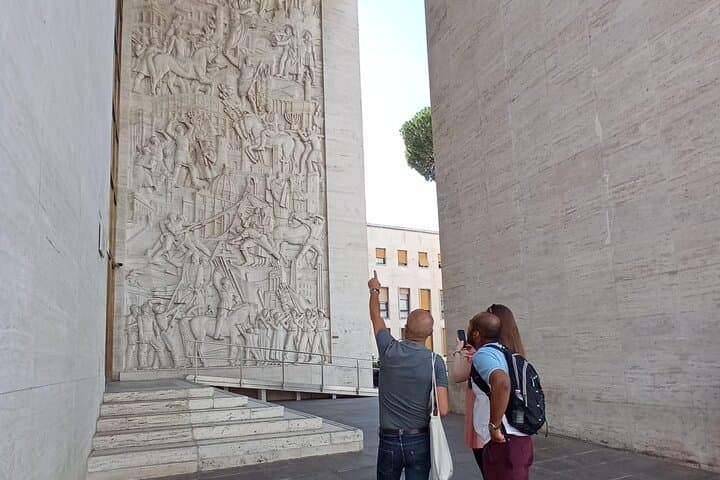
Started at the end of 1937 and completed at the end of 1939, Palazzo Uffici, designed by Gaetano Minnucci, was the first permanent structure to be completed in the vast plan for the Rome Universal Exhibition. The beautiful bas-relief by Publio Morbiducci, at the main entrance to the building, represents "La storia di Roma attraverso le opere edilizie" ("The history of Rome through its building works").
The palazzo was designed by Adalberto Libera for the 1942 Universal Exposition. Construction started in 1938 but was cancelled due to World War II. It was completed in 1954. Masterpieces of the Rationalism Architecture. The fresco by Achille Funi depicting scenes from the origins of Rome is the greatest artwork, still Unfinished, housed into the Palace
The Museum of the Roman Civilization (Italian: Museo della Civiltà Romana) is a museum in Rome (Esposizione Universale Roma district), devoted to aspects of the Ancient Roman civilization.
The Beautiful Neoclassical Villa that was The Private House of Mussolini and his family in Rome.
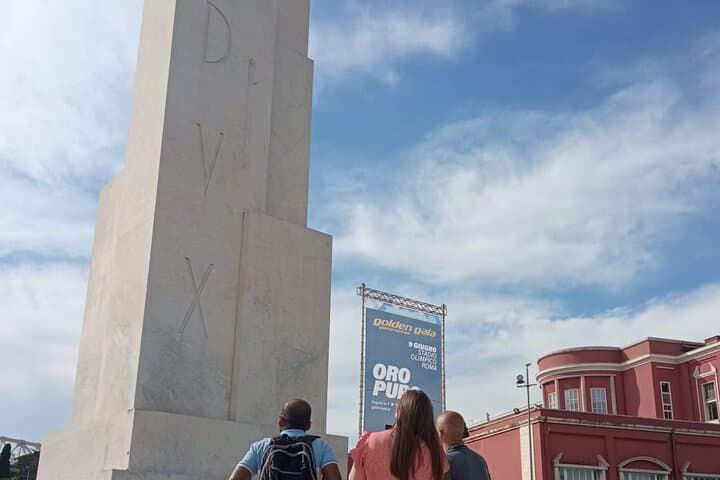
This only modern obelisk in Rome was erected by Mussolini himself and bears the words "MVSSOLINI DVX" („Mussolini, the Leader") and the marking of the Italian Fascists. This "Obelisco di Mussolini" stands in the centre of the Foro Italico, which was originally known as the Foro Mussolini. The obelisk is erected out of Carrara-Marble and weighs as estimated 300 tonnes. At the top a golden point is fixed.
The mosaic swimming pool built as part of Mussolini’s Foro Italico complex. It is like no other, pure marble with stone mosaic decorations reminiscent of Roman sports scenes.
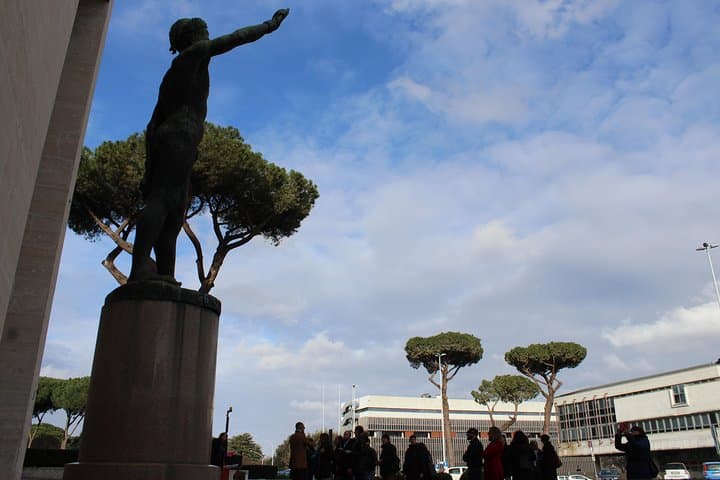
It was designed in the 1920s as a complement to the annexed Fascist Academy of Physical Education (now the seat of CONI, Italian Olympic Committee), to be used by its students for training. Originally designed by Enrico Del Debbio, construction was completed in 1928. It has Carrara marble steps lined by 59 (60 in the original project) marble statues in classical style portraying athletes that perform various sporting disciplines. Each statue was offered by the provinces of Italy.
Highlights
What's included
Traveller Ratings
Important Information
- Wheelchair accessible
- Infants and small children can ride in a pram or stroller
- Public transportation options are available nearby
- Infants are required to sit on an adult’s lap
- Transportation options are wheelchair accessible
- Not recommended for travelers with spinal injuries
- Not recommended for pregnant travelers
- Suitable for all physical fitness levels
- Tour by Vespa Scooter is not allowed for Pregnant Women