Christian Rome Private Tour: Papal Basilica/Catacombs/Appian way
Description
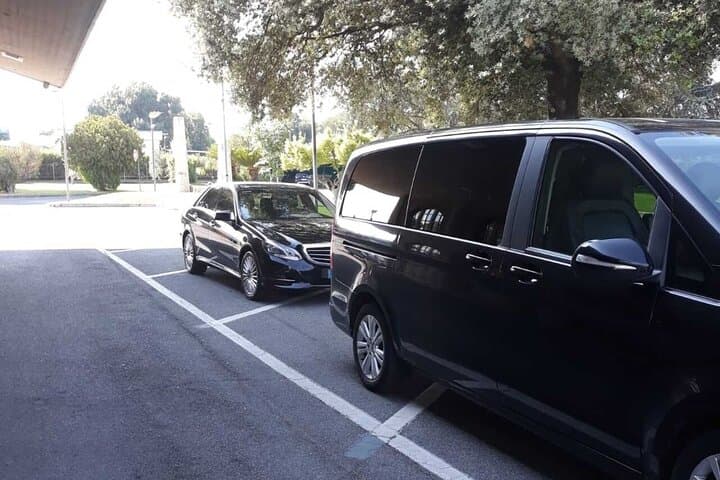
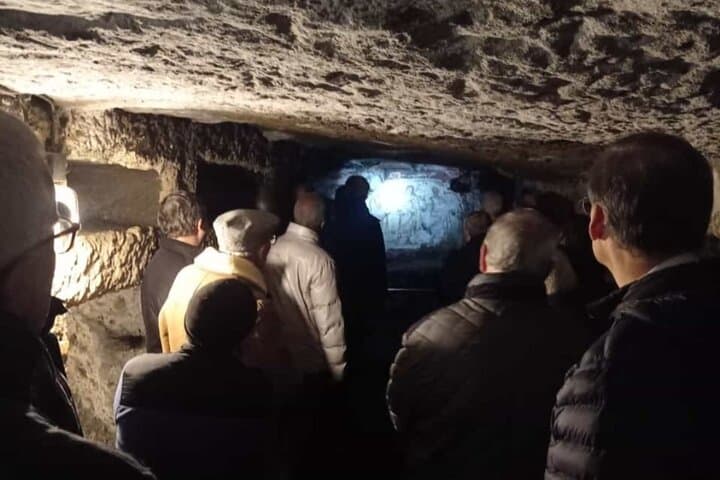
Discover Rome’s most interesting attractions, which most tourists miss. Go beneath the bustling city to the Catacombs of San Callisto, where you can see ancient tombs and artwork. Then along cobblestone streets and under aqueducts on the Appian Way, once considered one of the most important roads in the Roman Empire. Embark on an intriguing journey exploring the "Secrets Below Rome" with a private driver. Enjoy the convenience of hotel pick-up as you venture into the depths of Rome's history. Descend into these ancient underground burial sites, where early Christians once gathered and revered. Next, follow the path of ancient Romans along the storied Appian Way. Marvel at the remnants of this historic road, immersing yourself in the echoes of its past. With personalized transportation and insightful guidance, delve into the hidden narratives and lesser-known wonders that lie beneath Rome's surface.
Tour Options
Itinerary
Originally known as the Porta Appia, the gate sat astride the Appian Way, the regina viarum (queen of the roads), which originated at the Porta Capena in the Servian Wall.
The Catacombs of Rome (Italian: Catacombe di Roma) are ancient catacombs, underground burial places in and around Rome, of which there are at least forty, some rediscovered only in recent decades.
The Appian Way (Latin and Italian: Via Appia) is one of the earliest and strategically most important Roman roads of the ancient republic. It connected Rome to Brindisi, in southeast Italy. Its importance is indicated by its common name, recorded by Statius, of Appia longarum... regina viarum ("the Appian Way, the queen of the long roads"). The road is named after Appius Claudius Caecus, the Roman censor who began and completed the first section as a military road to the south in 312 BC during the Samnite Wars.
Santa Maria in Palmis also known as Chiesa del Domine Quo Vadis, is a small church southeast of Rome. It is located about some 800 m from Porta San Sebastiano, where the Via Ardeatina branches off the Appian Way, on the site where, according to the apocryphal Acts of Peter, Saint Peter met the risen Christ while Petrus was fleeing persecution in Rome. According to the tradition, Peter asked him, "Lord, where are you going?" (Latin: Domine, quo vadis?). Christ answered, "I am going to Rome to be crucified again"
The Villa of Maxentius is an imperial villa in Rome, built by the Roman emperor Maxentius. The complex is located between the second and third miles of the ancient Appian Way, and consists of three main buildings: the palace, the circus of Maxentius and the dynastic mausoleum, designed in an inseparable architectural unit to honor Maxentius.
The pyramid of Cestius is a Roman Era pyramid in Rome, Italy, near the Porta San Paolo and the Protestant Cemetery. It was built as a tomb for Gaius Cestius, a member of the Epulones religious corporation. Due to its incorporation into the city's fortifications, it is today one of the best-preserved ancient buildings in Rome.
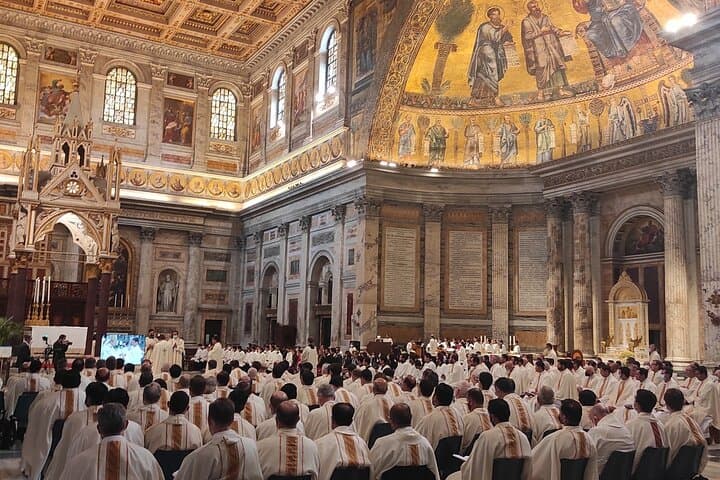
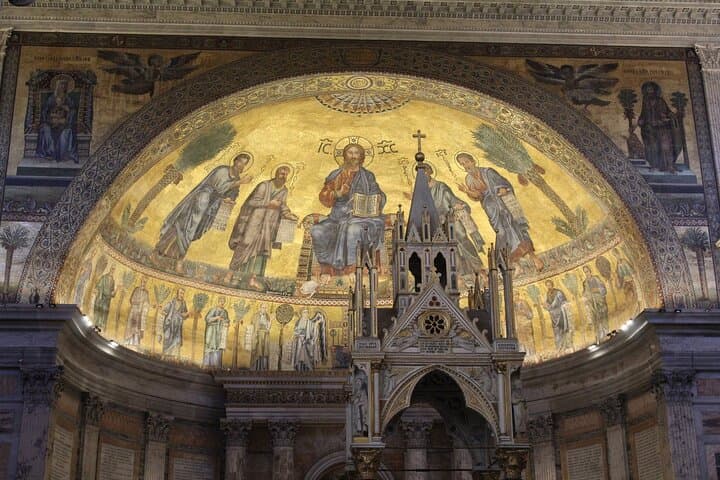
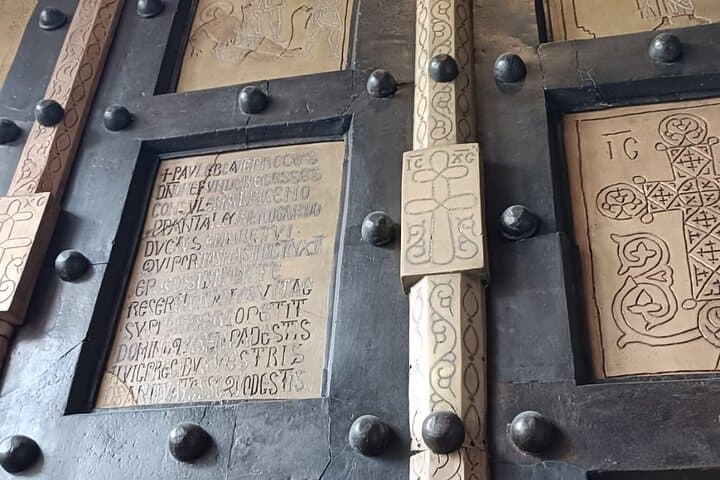
The Papal Basilica of Saint Paul Outside the Walls (Italian: Basilica Papale di San Paolo fuori le Mura) is one of Rome's four major papal basilicas,[a] along with the basilicas of Saint John in the Lateran, Saint Peter's, and Saint Mary Major, as well as one of the Seven Pilgrim Churches of Rome.
The Orange Trees Garden is the name used in Rome to describe the Parco Savello. It is about 7,800 square meters and is located on the Aventine Hill. The park offers an excellent view of the city. The garden, as it is today, was designed in 1932 by Raffaele De Vico.
The Aventine Hill is the southernmost of Rome's seven hills.
The Circus Maximus is an ancient Roman chariot-racing stadium and mass entertainment venue in Rome, Italy. In the valley between the Aventine and Palatine hills, it was the first and largest stadium in ancient Rome and its later Empire.
Highlights
What's included
Pickup Locations & Times
Please provide pick up place.
Traveller Ratings
Important Information
- Infants and small children can ride in a pram or stroller
- Public transportation options are available nearby
- Specialized infant seats are available
- Suitable for all physical fitness levels