TIWANAKU RUINS. Spiritual & Political Centre - Tiwanaku Culture.
Description
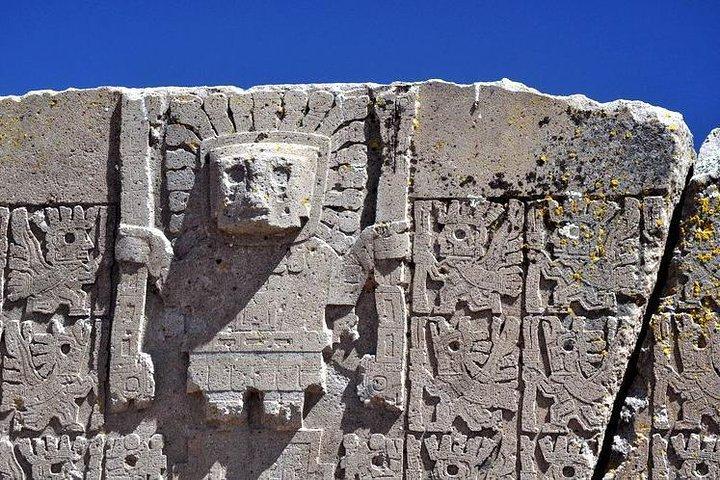
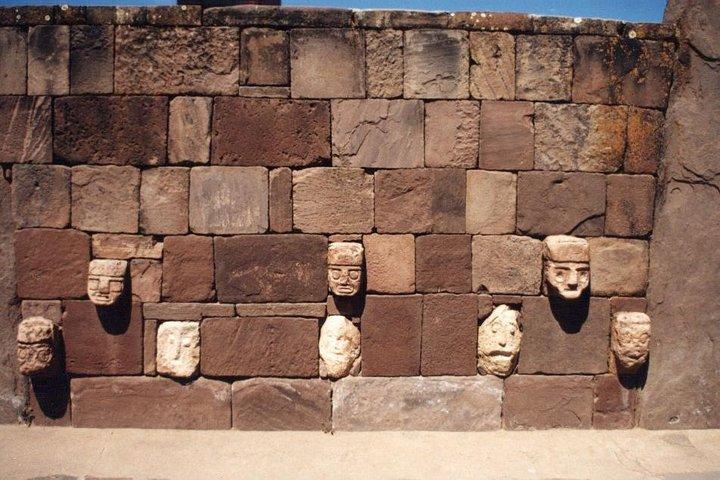
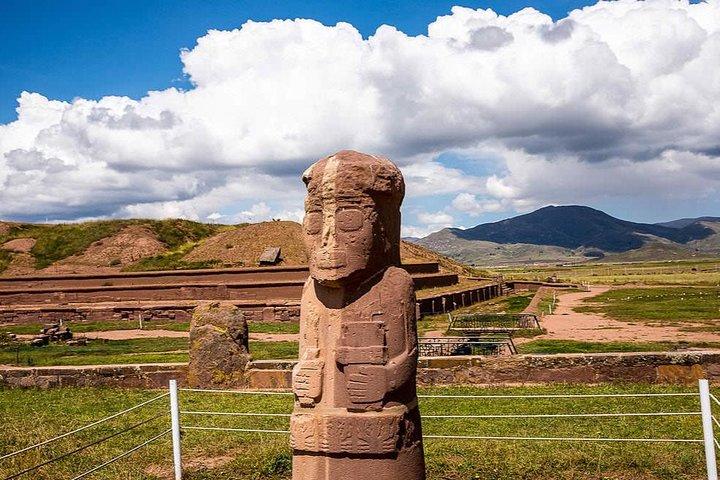
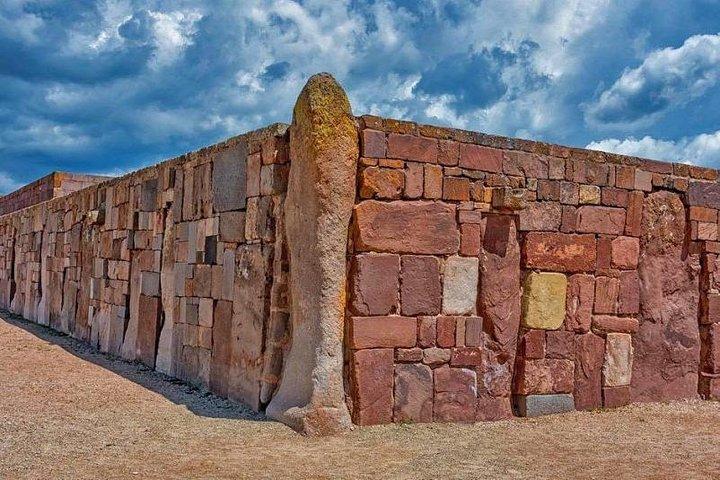
The city of Tiwanaku, capital of a powerful pre-Hispanic empire that dominated a large area of the southern Andes and beyond, reached its apogee between 500 and 900 AD. Its monumental remains testify to the cultural and political significance of this civilisation, which is distinct from any of the other pre-Hispanic empires of the Americas. The public - religious space of this city is shaped by a series of architectural structures that correspond to different periods of cultural accessions: Temple Semi-underground, Kalasasaya's Temple, Akapana's Pyramid, Pumapumku's Pyramid. In addition, the area politician - administrative officer is represented by structures as the Palace of Putuni and Kantatallita. This architectural complex reflects the complex political structure of the period and its strong religious nature. The most imposing monument at Tiwanaku is the Pyramid of Akapana. One of the most popular places to visit in South America.
Tour Options
Itinerary
VISIT: - THE LITICO MUSEUM - CERAMIC ARCHAEOLOGICAL RUINS - PUMA PUNKU
Highlights
What's included
Traveller Ratings
Important Information
- Service animals allowed
- Public transportation options are available nearby
- Infants are required to sit on an adult’s lap
- Suitable for all physical fitness levels
Reviews(4)
A day tour to Tiwanaku with the guide Ricky was a pure rush through the museums and the site. Parts of Tiwanaku and Puma Punku were simply skipped. An hour more in total time - and the rush would not have been necessary. I really don't fly halfway around the world for that. Quick, fast and really careless. No consistent translation into English. I would not use this provider again. A real mistake and a disappointment.
This tour was sold as 4 hours actual was 9hours sold as English tour all in Spanish Never answered questions Has so much potential
Hello Jenny. 1) It takes around 4 hours to get to the historical site of Tiwanaku. This place is not located in the city centre. As you saw for yourselves, it's an important part of Andean culture. 2) We had a multinational and diverse group, we put our multilingual guide who had to speak 3 languages including English on the tour. As you may appreciate not many people (non English speaking) have the confidence to speak English. So the guide spoke in different languages to include them feel inclusive. I hope you understand. We appreciate your feedback and wish you have a brilliant time for the rest of time in Bolivia.
Fantastic place to see but would have preferred more time in the museums and less at lunch. There was so much to see but we ere walked through fairly quickly. The tour guide was a little quiet
Thank you for the review. We will get the guides to be more talkative in the right form. Appreciate the feedback.