Shore Excursion Colombo City Tour
Description
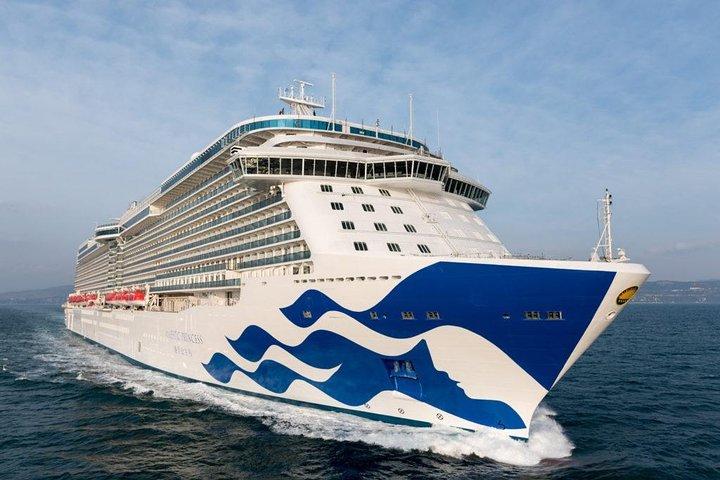
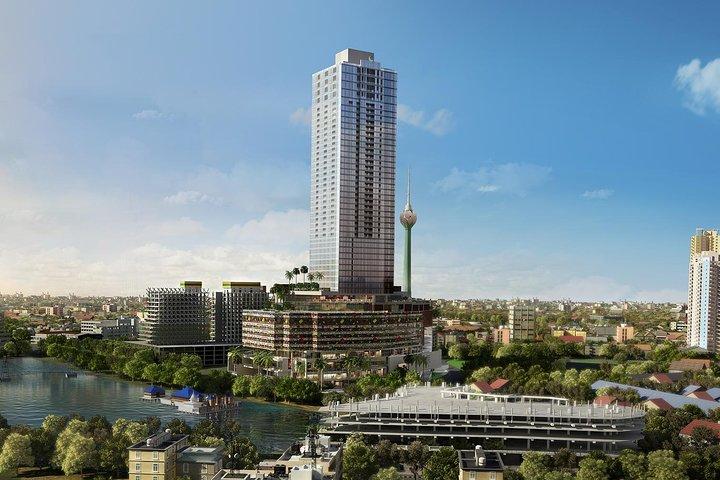
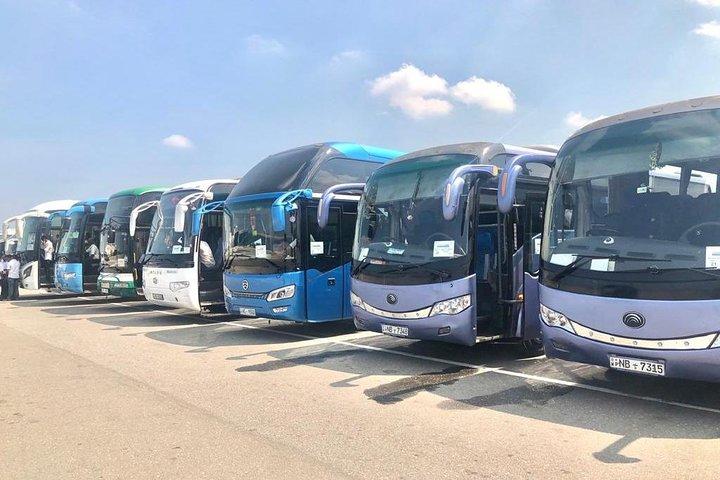
Exploring Colombo independently and the risk of getting lost or delayed. Make things easy with a private shore excursion that whisks you around the sights smoothly and comfortably. Travel by Shared Bus/Coach, visit top sights such as the Seema Malakaya Temple,shop for souvenirs and handicrafts emporiums and hear tales of local life from your guide that you'd miss if alone. • Explore Colombo with ease on a Shore Excursion from the Cruise Port. • Forget cabs or buses,sightseeing stress-free by air-conditioned vehicle • See the sights, shop at markets, and hear about local life and history
Tour Options
Itinerary
Colombo Fort Clock Tower is a clock tower and was a lighthouse in Colombo. The lighthouse is no longer operational, but the tower remains and functions as a clock tower. It is located at the junction of Chatham Street and Janadhipathi Mawatha (formerly Queens Road) in Colombo fort. The tower was constructed as a clock tower in 1856-57 and completed on the 25 February 1857.[1] The tower was designed by Emily Elizabeth Ward, the wife of Governor Sir Henry George Ward (1797 – 1860).The construction was undertaken by the Public Works Department, under the supervision of Mr John Flemming Churchill (Director General of Public Works). The 29-metre-high (95 ft) tower was the tallest structure in Colombo at that time.The original clock was commissioned for ₤1,200 in 1814 by the then Governor Sir Robert Brownrigg (1759 – 1833) but was kept in a warehouse, due to economic reasons, until 1857 when it was finally installed.
In 1736 Governor of Ceylon, Gustaaf Willem van Imhoff, sought approval from the Dutch East India Company (Vereenigde Oost-Indische Compagnie or VOC) to demolish the existing church (Kasteel Kerk) within the Colombo Fort and construct a new one on the same site.[1] However, the VOC refused this request, and it wasn't until the arrival of Governor Julius Valentyn Stein van Gollenesse in 1743 that the impasse was overcome. He decided that the new church would be erected in the area beyond the city walls, which at the time was swamp and marshland. The Europeans mistook the packs of roaming jackals for wolves, and the area became known as Wolvendaal (Wolf's Dale or Wolf's Valley). The site that was selected was on a hill which commanded views across the town and over the harbour and was in proximity to the town's entrance. The site was also occupied by a small church, which had existed from the earliest period of Dutch occupation, when the Wolvendaal neighbourhood was a quiet suburban parish. The foundations of the church were laid in 1749 and it took eight years to build. It was completed on 6 March 1757, when it was dedicated for public worship by Rev. Matthias Wirmelskircher, Rector of the Colombo Seminary. At the dedication there were two Governors present, Joan Gideon Loten and his successor Jan Schreuder, together with Members of the Council, Reverend Ministers (Predikants), prominent Burghers and their families.
Experience the local people living in Srilanka with all the Wholesale Shops in this Urban Commercial area of Srilanka known as the Pettah Bazaar
The mosque is one of the oldest mosques in Colombo and a popular tourist site in the city. Construction of the Jami-Ul-Alfar Mosque commenced in 1908 and the building was completed in 1909. The mosque was commissioned by the local Indian Muslim community, based in Pettah, to fulfill their required five-times-daily prayer and Jummah on Fridays.
The Old Parliament Building, is the building that houses the Presidential Secretariat of Sri Lanka. Situated in the Colombo fort area facing the sea, it is in close proximity to the President's House, Colombo and adjacent to the General Treasury Building. The building housed the island's legislature for 53 years until the new parliamentary complex was opened at Sri Jayawardenepura in 1983.
Galle Face is a 5 ha (12 acres) ocean-side urban park, which stretches for 500 m (1,600 ft) along the coast, in the heart of Colombo, the financial and business capital of Sri Lanka. The promenade was initially laid out in 1859 by Governor Sir Henry George Ward, although the original Galle Face Green extended over a much larger area than is seen today. The Galle Face Green was initially used for horse racing and as a golf course, but was also used for cricket, polo, football, tennis and rugby.
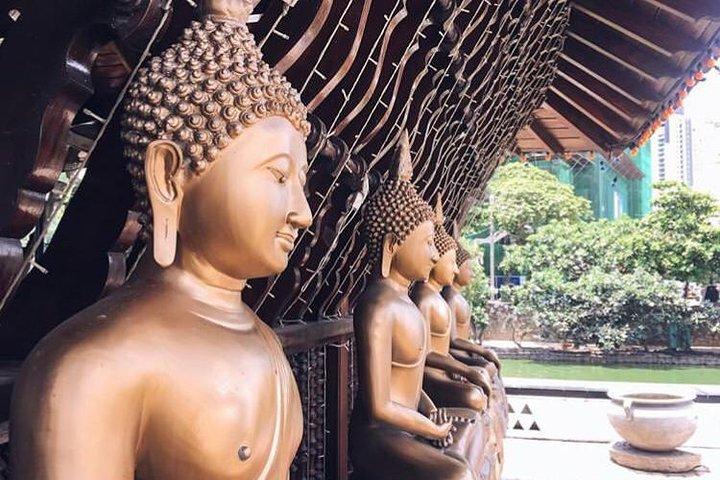
Gangaramaya is one of the oldest Buddhist temples in Colombo, started by the famous scholar monk Hikkaduwe Sri Sumangala Nayaka Thera in the late 19th Century. After the Venerable Sri Sumangala, his chief pupil Devundera Sri Jinaratana Nayake Thera took on the administration of the temple. It was he who laid the foundation to convert the little temple to an institute of international reckoning. The next chief incumbent was the Ven. Devundara Keerthi Sri Sumangala Jinaratana Vacissara Thera, the teacher of the Ven. Galboda Gnanissara, who worked to make the Gangaramaya what it is today: much more than a temple in the conventional term, but a place of worship, a seat of learning and a cultural centre. This Temple was very famous for an Elephant namely Ganga and all the statues here are pure Gold.
Independence Memorial Hall (also Independence Commemoration Hall) is a national monument in Sri Lanka built for commemoration of the independence of Sri Lanka from the British rule with the restoration of full governing responsibility[2] to a Ceylonese-elected legislature on February 4, 1948. It is located in Independence Square (formerly Torrington Square) in the Cinnamon Gardens, Colombo. It also houses the Independence Memorial Museum. The monument was built at the location where the formal ceremony marking the start of self-rule, with the opening of the first parliament by the HRH Prince Henry, Duke of Gloucester occurred at a special podium February 4, 1948.
Sri Lanka’s gem industry has a very long and colorful history. Sri Lanka was affectionately known as Ratna-Dweepa which means Gem Island. The name is a reflection of its natural wealth. Marco Polo wrote that the island had the best sapphires, topazes, amethysts, and other gems in the world.[1] Ptolemy, the 2nd century astronomer recorded that beryl and sapphire were the mainstay of Sri Lanka’s gem industry. Records from sailors that visited the island states that they brought back “jewels of Serendib”. Serendib was the ancient name given to the island by middle – eastern and Persian traders that crossed the Indian Ocean to trade gems from Sri Lanka to the East during the 4th and 5th century. You will be taken to a Gem Museum to see the History of Gems
Srilanka has its finest Tea which is very famous among Tourists, you will be taken to a Tea Hub to taste various types of Tea with a brief explaination of various Srilankan Tea
The construction of the hall was carried out by a joint Sri Lankan and Chinese workforce with a considerable portion of the building materials being imported from China. In 1998 a small Exhibition Centre, the Sirimavo Bandaranaike Memorial Exhibition Centre, was built on the grounds as a gift from China. The BMICH premises is managed by the S. W. R. D. Bandaranaike National Memorial Foundation (BNMF) which is chaired by the President of Sri Lanka.
You will be taken to a Handicraft Museum to shop and see finest Handicrafts and Souvenirs
Highlights
What's included
Traveller Ratings
Important Information
- Wheelchair accessible
- Infants and small children can ride in a pram or stroller
- Public transportation options are available nearby
- Infants are required to sit on an adult’s lap
- Transportation options are wheelchair accessible
- All areas and surfaces are wheelchair accessible
- Suitable for all physical fitness levels
- At time of booking, Cruise ship passengers must provide the following information at time of booking: ship name, docking time, disembarkation time and re-boarding time
Reviews(1)
We booked a Shore Excursion with this company for our group of 16 which was a Shared Tour for 4 Hours. when we dock out of the Ship we found the Tour Group with the Shore Excursion board and easily got us to the Coach. The Tour was very smooth and we are sure that we will not get this much of experience for a short period of 4 hours in the City with a great experience of the Old Dutch Places. Aashik was our guide and he was very kind, he always try to explore us more and give brief descriptions for each and every places clearly. The Highlight of the City Tour was the Old Dutch Church and Red Mosque at Pettah which was very attractional with its beautiful architecture. Aashik knows every places in Colombo and he manages the time properly for all the travellers in our Coach of 40 travellers. He took us to a Gem Shop where we got a good knowledge of Srilankan Saphires and took us to a Tea Shop to taste various flavours of Tea. The Tour took more intresting for his speech and explaination by the way we are on time too the Ship without any delay too. we are so thankful to Kingfisher Tours and Aashik for arranging everything perfectly and giving us the best time in Colombo. we will definitely recomment this company and our guide for all the future travellers where we can guarantee for the money we spend
Dear Madam, We are so Thankful for your precious review on us and about our Guide Sasi, we are more than happy that we made your stay wonderful. Please visit us again to give the best Hospitality service from Kingfisher Tours Srilanka