Pure Gold Authentic Kintsugi Ceramic Workshop with Master Artisan
Description
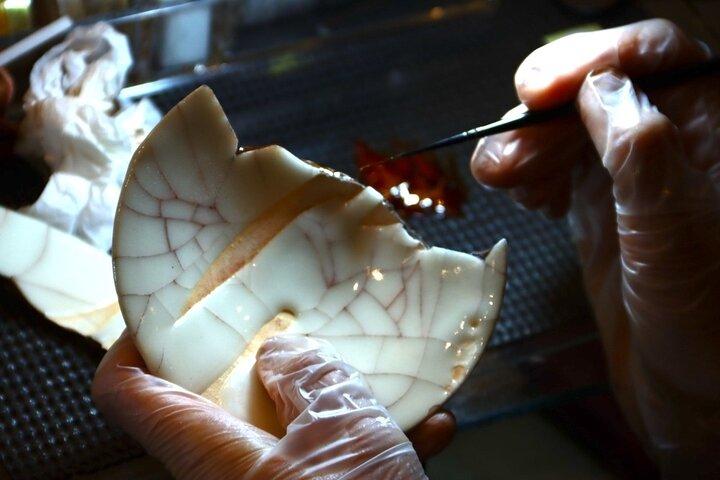
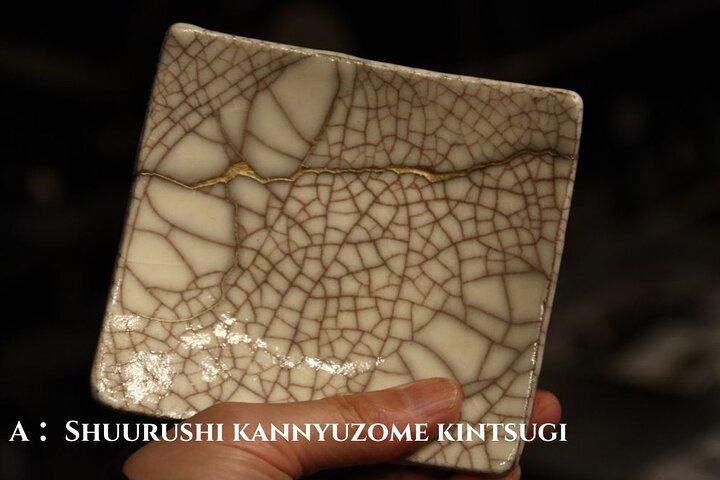
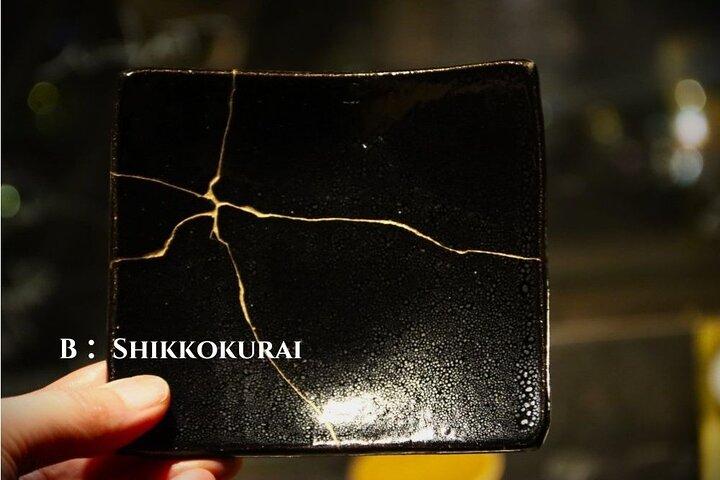
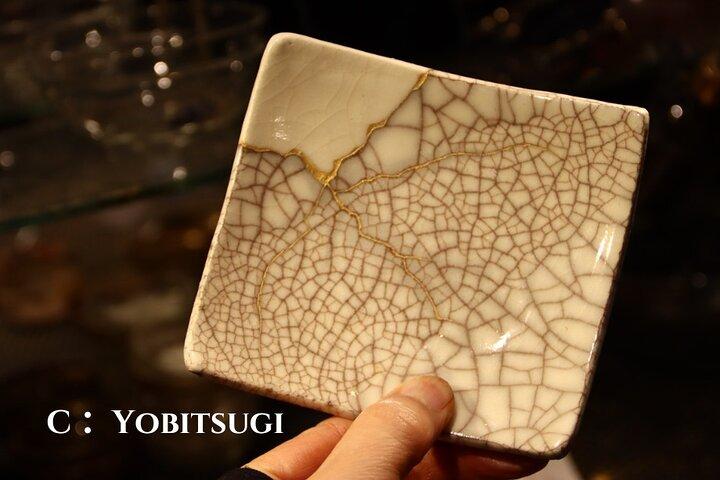
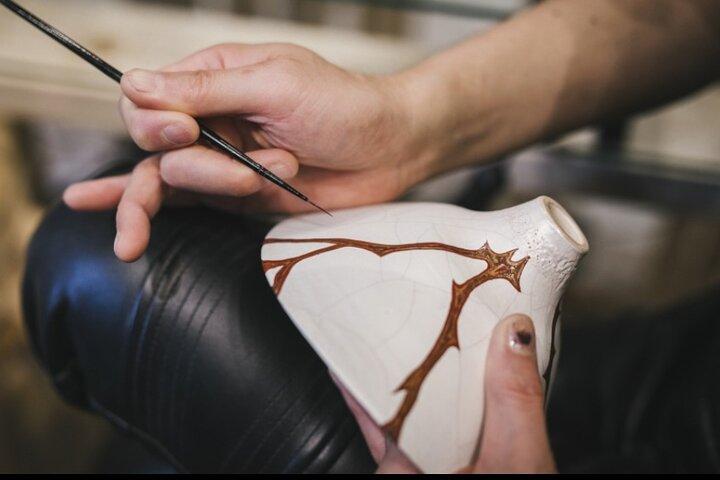
Kintsugi is a simple restoration technique that uses gold or other metal powder to repair broken, chipped, or cracked pieces. Kintsugi has been handed down in Japan from ancient times, and the culture of taking good care of things has attracted attention worldwide. Kintsugi lacquer comes from the poison oak tree or black tree of the poison ivy family. When dried, lacquer is a natural adhesive that is harmless to the human body and has a hardening effect. Cracks are considered a landscape in kintsugi, and the joint is decorated with gold, silver, or other metal powder. Kintsugi is based on not pretending that the cracks have never existed but considering them part of the item's history and breathing new life into it. In 2024, Master Taku is awarded with the Medal with Dark Blue Ribbon, the honorable commendation given to individuals who have made significant achievements in the fields of science, art, invention, improvement, and creation this year.
Tour Options
Highlights
What's included
Traveller Ratings
Important Information
- Public transportation options are available nearby
- Infants and small children can ride in a pram or stroller
- All areas and surfaces are wheelchair accessible
- Wheelchair accessible
- Suitable for all physical fitness levels
Reviews(225)
I paid near $150.00 for a 2 hours class with a master artisan, I got an hour class with one of the apprentice. The master gave the class to the previous group who was lingering on my time. Instead of a seat in the class I was put on a table near the closet and instructed by one of his helper on the art of Kintsugi. She was very good or I was learning fast because we were done in an hour. I completed my project and got the tools to do it at home. At no time did the master came and check with me. The instructions were adequate but I felt kind of cheated. I will recommend this activity but make sure you get the master or pay for the help
The concept, history and technique were all explained through words and videos, and the teachers guided us closely enough that we didn't make mistakes while still doing all the work ourselves, which was ideal. The gentleman guiding us was very kind and friendly. Now we have wonderful souvenirs to keep a wonderful memory alive. Been wanting to try kintsugi for a very long time and I'm glad I did it here.
Had a lot of fun learning about traditional Japanese ceramics and culture. It was really cool learning by about the different tools, materials and history behind the designs and work.
It was very great! We had such an amazing time as a group !
It’s really fun, the first time trying to fix the ceramic with gold
And excellent experience! Very relaxing, meaningful, and educational! High recommend!
It was a great class to experience and understand the beautiful art of Kintsugi! The artist was very kind and the other teachers were also. It was wonderful- we loved it so much, they let us buy other pieces to give to friends!
Junko was a super friendly and helpful instructor! Fun experience to learn about the history and meaning of the practice. Great to be able to create a piece as a beautiful souvenir
Fun class! Highly recommend learning about an amazing technique to make something broken even more beautiful. The studio is in the basement behind a stainless steel gate. Traffic can be awful so plan for extra time. I barely made it on time and I built in 30 minutes of ‘extra’ time. Also, in Japan, on time is 5 minutes early.
As someone passionate about art and a studio art minor, I was looking forward to this experience the most during my entire trip to Japan and was unfortunately let down. The instructor/artist clearly was very good at his craft however not great at explaining things well. I asked questions for understanding and assistance multiple times during the session and was ignored most of the time. I was 1 of 4 people in the class so it had nothing to do with amount of others in the class. Not sure if the instructor was upset or what was going on but it seemed odd. I really was hoping for a deeper understanding of the method and background of the art.