PRIVATE TOUR - Hue where Emperors Dreamed and Dynasties Linger
Description
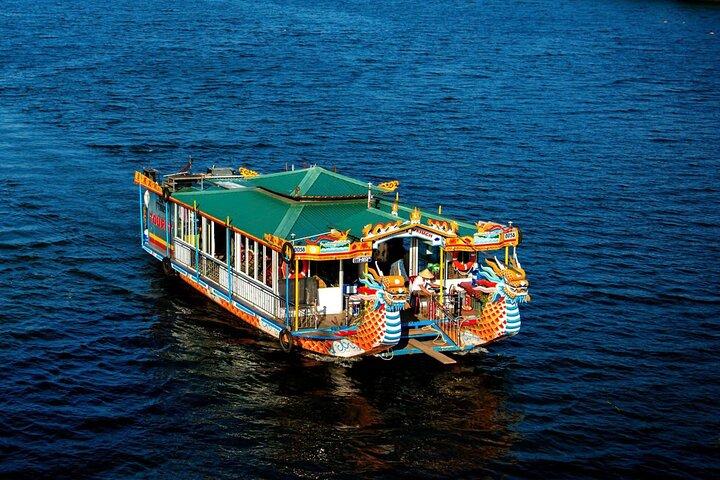
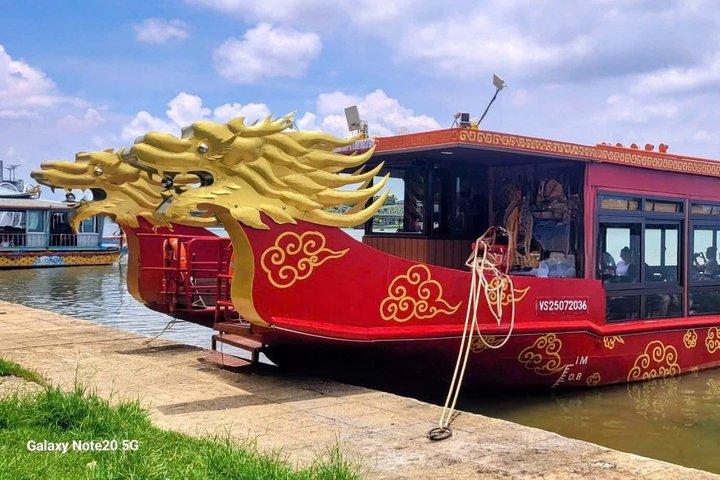
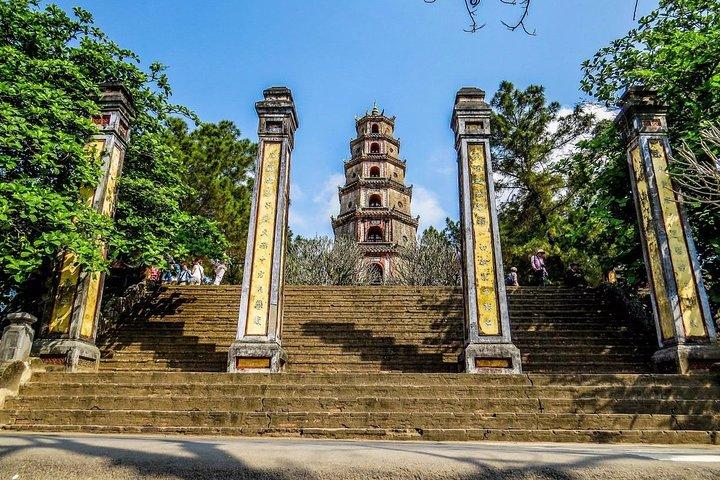
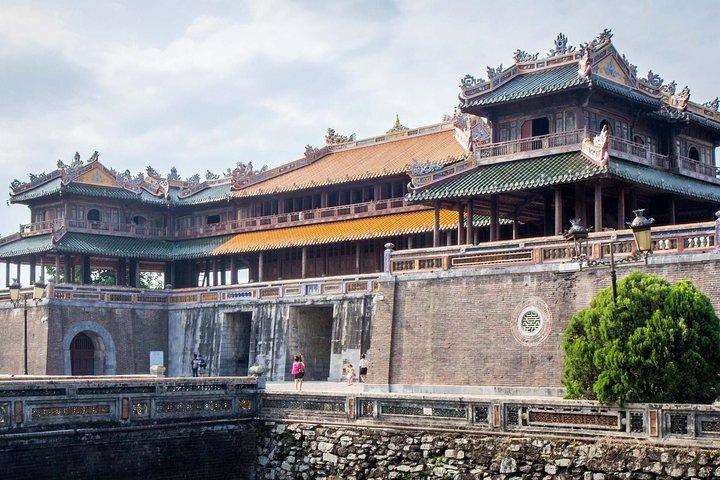
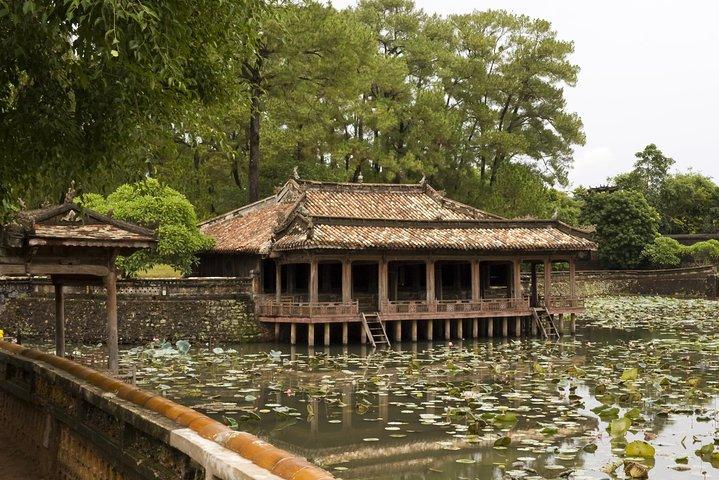
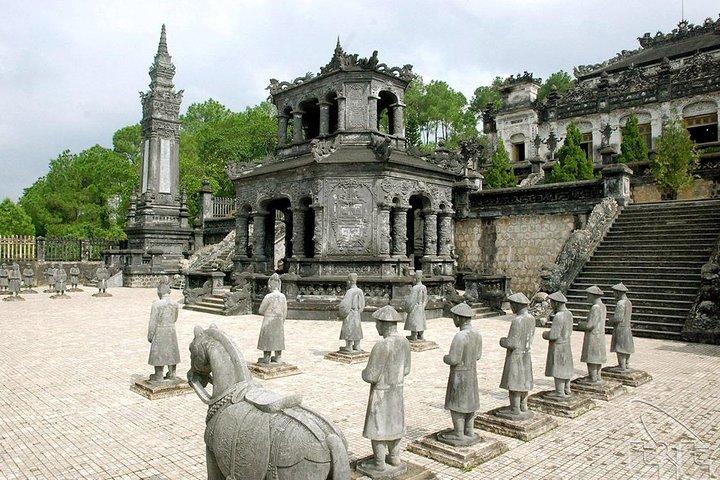
Step back in time to uncover the rich heritage of Hue, Vietnam’s former imperial capital. For over 140 years, this city served as the royal heart of the nation, remaining today a living museum of ancient temples, grand citadels, and elegant French-colonial architecture. Your journey begins with a peaceful boat ride along the Perfume River to Thien Mu Pagoda, whose iconic seven-tiered tower rises gracefully above the landscape. As one of Vietnam’s oldest spiritual sites, it offers a window into the city’s soul. Next, delve into the grandeur of the Imperial City, a vast walled complex that once housed the royal court. Though time has left its mark, the surviving gates and pavilions still echo with the legacy of emperors. After lunch, explore the poetic serenity of Tu Duc Tomb and the striking blend of Eastern and Western styles at Khai Dinh Tomb. As the sun softens, return to your hotel with a deeper appreciation of Hue's imperial legacy.
Tour Options
Itinerary
Situated on the north bank of the Perfume River in the village of Huong Long, five kilometers from the city of Hue, Thien Mu Pagoda is one of the most beautiful and well-preserved religious sites in Vietnam.
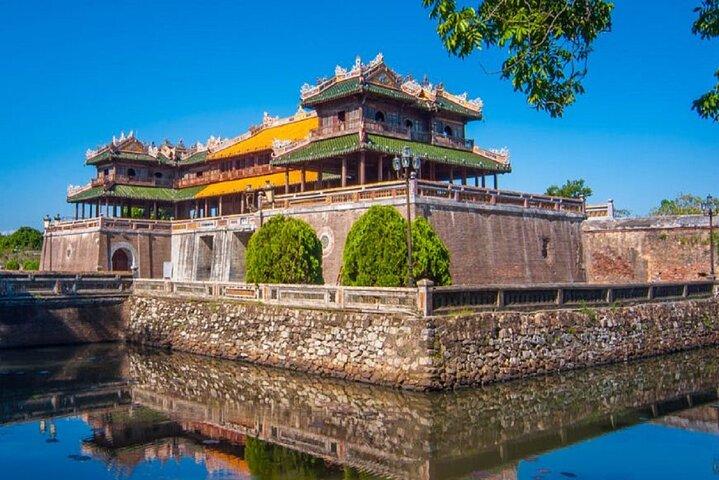
The Complex of Hue Monuments is a UNESCO World Heritage Site and is located in the city of Hue in central Vietnam. Hue was founded as the Vietnam capital city by Gia Long, the first king of the Nguyen Dynasty in 1802. It held this position for nine Nguyen dynasties until 1945. The massive complex features hundreds of monuments and ruins, such as the Forbidden Purple City, once the residence of the royal family and badly damaged during the Vietnam War, the Imperial City, royal tombs, flag tower, pagodas, temples, a library and museum.
Tu Duc was Vietnam's fourth emperor and lived from 1829 to 1883, during which time he is said to have had 104 concubines. During his reign, Vietnam lost its independence to France
The Nguyen Emperor Khai Dinh's Royal Tomb is unique among the royal tombs in Hue, Vietnam. Where other royal tombs are expansive and invite respectful reflection, Khai Dinh built his final resting place to be monumental in style and bombastic in execution.
Highlights
What's included
Pickup Locations & Times
Please be ready in the hotel lobby 10 minutes before your scheduled pick-up time. Our guide will meet you there and be happy to assist with any questions you may have.
Traveller Ratings
Important Information
- Infants are required to sit on an adult’s lap
- Travelers should have at least a moderate level of physical fitness
Reviews(5)
A UNESCO World Heritage site which, if accompanied by an informative guide, enables visitors to learn a great deal about life during the Nguyễn Dynasty, including the Emperor who had a thousand (legitimate) wives, the roles of eunuchs, and the meaning of dress colours. An entertaining as well as historically significant experiential visit.
Forbidden Purple City is the innermost enclosed area of Hue Citadel. No moat here but still the thick walls and an imposing gate leading to a grand spectacle featuring a palace of majestic architecture and grandeur. This area was meant to support the emperor and his family in everything they needed. It’s being restored slowly but you can still see/feel? How impressive this site must have been at its heyday. Lots of walking so bring some comfortable shoes and water. A local guide would be helpful too.
The Forbidden Purple City in Hue felt like a portal to another world. The moment you walk through the imposing gates, you will be struck by the quiet grandeur of it all. The architecture was majestic, though worn by centuries of history; and the old courtyards, narrow hallways, faded murals and crumbling parts only added to the charm. Wear comfortable shoes because you’ll do a fair bit of walking— a hat and some sunscreen wouldn’t hurt too cos the sun can be pretty strong during the summer months. And just in case you're hankering after a more immersive experience, consider hiring a local guide. I did, and I do not think I would have enjoyed quite as much if I hadn't had all these extra bits explained.
The older section of the city is a moated, walled citadel surrounded by eleven stone gates. This palace is somewhat like the Forbidden City in Beijing China but in no way as crowded with tourists (especially those pushing and yelling CHINESE tourists). This wall enclosed Royal Compound is Massive at 3 X 3 Miles (NOT exaggerating), thus much bigger than the Forbidden City in Beijing China. Hue became the capital city of a reunified Vietnam from 1802 until 1945 under the reign of the Nguyễn dynasty, where the last emperor turned over all political control to Ho Chie Min at the end of the American war. We observed the damage and rebuilding of the citadel’s grounds following the Viet Cong Tet Offensive. THIS IS A MUST SEE location for anyone visiting Vietnam, but make sure you come here with a guide, as just roaming around the grounds on your own, you will NOT relate well to all the history here. There is a massive water Moat around the 3X3 mile complex, and within its design was to be able to fend off invaders, and especially invaders at the time that had the ultimate weapon = Elephants!!!!