Hiroshima and Miyajima 1 Day Tour for who own the JR Pass only
Description
- Great for those who have a JR pass. So, if you’re short on time, you can actually visit Hiroshima as a daytrip from these cities. This is tour schedule: 7:30 Meet customer at Kyoto Station, (Shinkansen Central Gate ) 8:00 Hikari 533 Kyoto Station → Hiroshima Station (Customer use JR pass by Own) 7:30 Meet customer at Shin-Osaka Station (Shinkansen Central Gate) 8:04 Sakura 545 ShinOsaka Station → Hiroshima Station (Customer use JR pass by Own) 9:33 Arrival Hiroshima Station from Hiroshima Station to Miyajima Miyajima sightseeing (Itsukushima shrine) Lunch (Free lunch time take lunch by customer Own) 13:00 Miyajima to Hiroshima Peace Memorial Park Peace Memorial Museum, Atomic Bomb Dome 17:00 Hiroshima Station (Customer can buy Bendo Box at here) 【Osaka】 17:52 Sakura 564 Hiroshima Station →19:21 Shin-Osaka Station End of tour 【Kyoto】 18:33 Sakura 566 Hiroshima Station → 19:59 Shin-Osaka Station transfer 20:21 Hikari 666 Shin-Osaka Station→20:34 Kyoto Station End of tour
Tour Options
Itinerary
Miyajima (宮島) is a small island less than an hour outside the city of Hiroshima. It is most famous for its giant torii gate, which at high tide seems to float on the water. The sight is ranked as one of Japan's three best views. While officially named Itsukushima, the island is more commonly referred to as Miyajima, Japanese for "shrine island". This is because the island is so closely related to its key shrine, Itsukushima Shrine, in the public's mind. Like the torii gate, the shrine's main buildings are built over water. Miyajima is a romantic place, best enjoyed by staying overnight at one of the island's ryokan. While there are usually many day tourists, in the evening the area becomes much quieter and more peaceful. There are also wild deer on the island that have become accustomed to people. In the day the deer wander around the same sites as the tourists, and in the evening they sleep along the walking paths.
The centuries-old Itsukushima Shrine (厳島神社, Itsukushima Jinja) on Miyajima is the source of both the island's fame and its name. Formally named Itsukushima, the island is more popularly known as "Miyajima", literally "shrine island" in Japanese, thanks to its star attraction. The shrine is known worldwide for its iconic "floating" torii gate. The shrine and its torii gate are unique for being built over water, seemingly floating in the sea during high tide. The shrine complex consists of multiple buildings, including a prayer hall, a main hall and a noh theater stage, which are connected by boardwalks and supported by pillars above the sea.
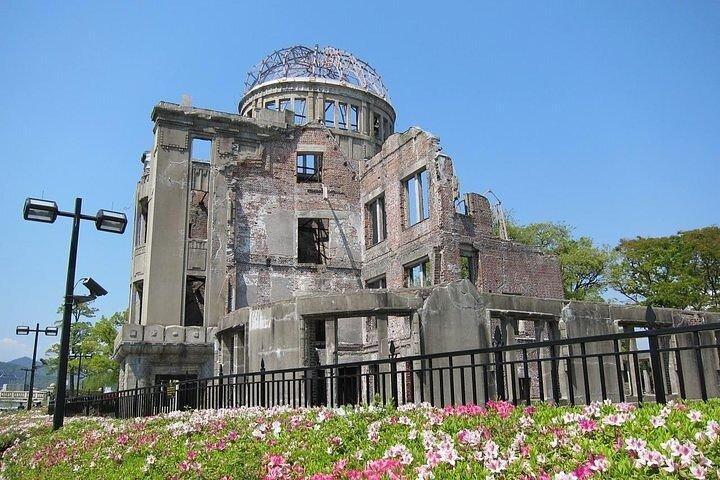
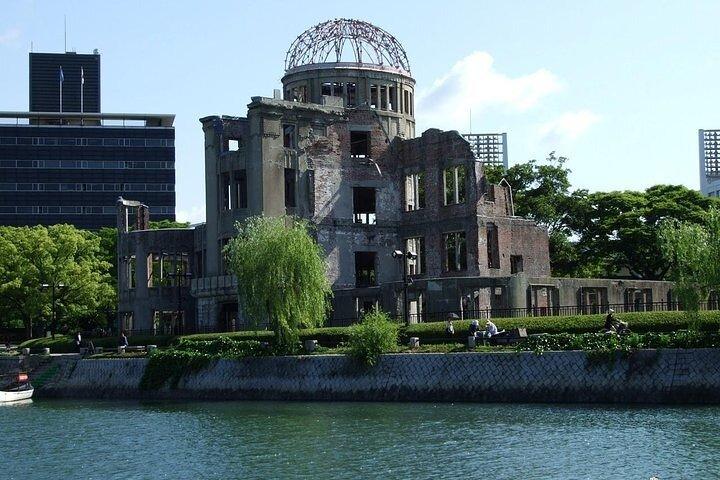
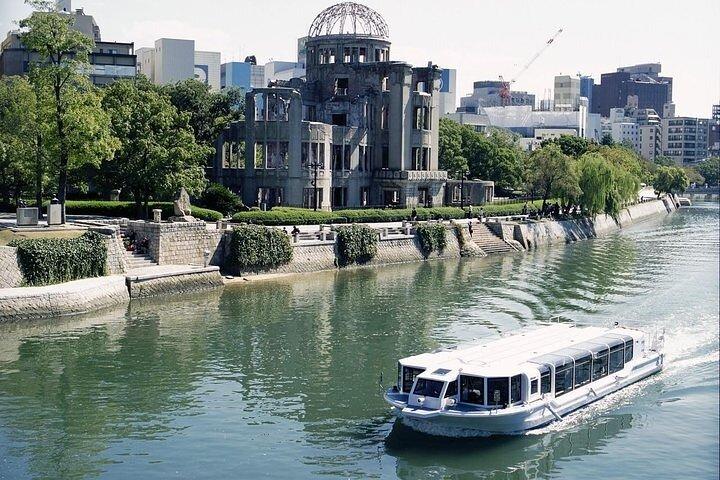
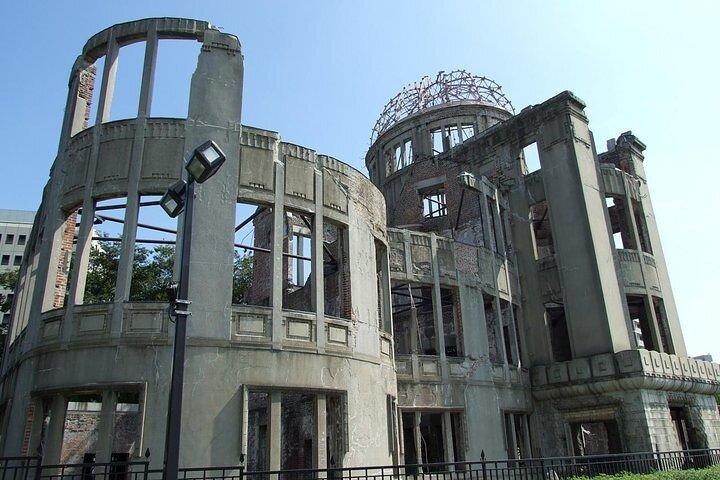
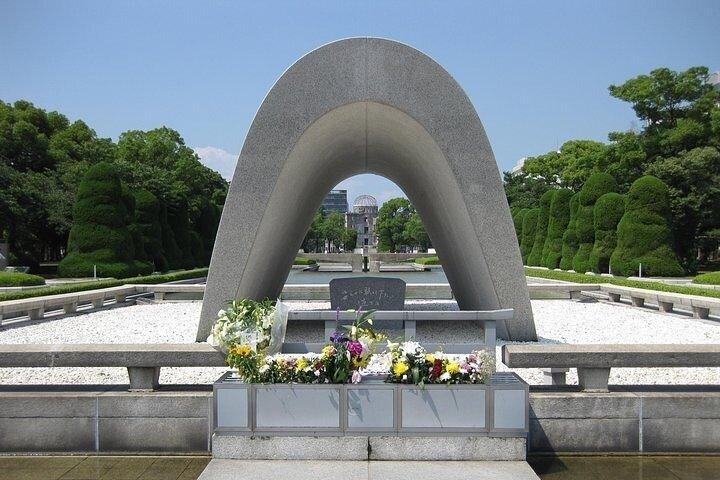
At 8:15am on 6th August 1945, the first atomic bomb in human history was dropped on Hiroshima. Although, the Atomic Bomb Dome was located almost directly underneath the explosion, it somehow avoided complete destruction and the remains of the building still stand today. The residents of Hiroshima decided to keep this tragic reminder of war intact. The site was designated as a World Heritage Site in 1996. Visit the Atomic Bomb Dome, the Cenotaph for Atomic Bomb Victims and the Hiroshima Peace Memorial Museum to gain a deeper understanding of the suffering caused by war and nuclear weapons and the true value of peace.
Hiroshima's Peace Memorial Park (平和記念公園, Heiwa Kinen Kōen) is one of the most prominent features of the city. Even visitors not looking for it will likely stumble upon the large park of over 120,000 square meters. Its trees, lawns, and walking paths are in stark contrast to the surrounding downtown area. Before the bomb, the area of what is now the Peace Park was the political and commercial heart of the city. For this reason, it was chosen as the pilot's target. Four years to the day after the bomb was dropped, it was decided that the area would not be redeveloped but instead devoted to peace memorial facilities.
The Hiroshima Peace Memorial Museum is the largest of Hiroshima's sites related to the atomic bomb. Designed by renowned architect Tange Kenzo (1913-2005), the museum opened in 1955, and in 2006 it was designated an Important Cultural Property of Japan. The museum consists of two adjacent buildings inside Peace Memorial Park. The main hall houses an extensive collection of artifacts from the time of the bombing, while the east building is focused on peace education through a variety of media. The main hall recently underwent major renovation, and its collection is now even more powerful and moving.
Highlights
What's included
Traveller Ratings
Important Information
- Public transportation options are available nearby
- Infants are required to sit on an adult’s lap
- Suitable for all physical fitness levels
- You can customize it as you like. If you have any requests please let us know in advance.
- If you want to change your schedule even on the tour day, your guide is always happy to help you.
- You can skip the spot where you don't go (※in this case we do not refund any fees) or change it with another place.
- If you add some new spots by your request, please pay the ticket fee on the spot. (Note that you may need to pay extra transportation fee)
- Please arrive at the meeting spot in time.
- In the event of a natural disaster, such as a typhoon, the tour will be canceled, and a full refund will be issued.
Reviews(3)
Tomoe Ishihara, was an excellent tour guide along with here assistance, was very accomodating on special tour requests, and answered all questions, very friendly. Have been on several bus tours around the world and this was the best one by far.
Sachiko was a great guide. We enjoyed our day travelling with her. She helped us with all the travel and the ferry ride to Miyajima. She constantly pointed out the highlights and provided a good story as we toured. She took us to a great local spot on Miyajima that is mostly frequented by locals. I would recommend her as a guide!
Our guide spoke English very fluently. She communicated and set up arrangements through WhatsApp. We purchased the JR tickets in advance. She picked us up from the hotel lobby and took care in explaining all the monuments and details of the museum. For once we didn’t have to worry about language or communication issues. Would recommend Ms. Jun anytime.